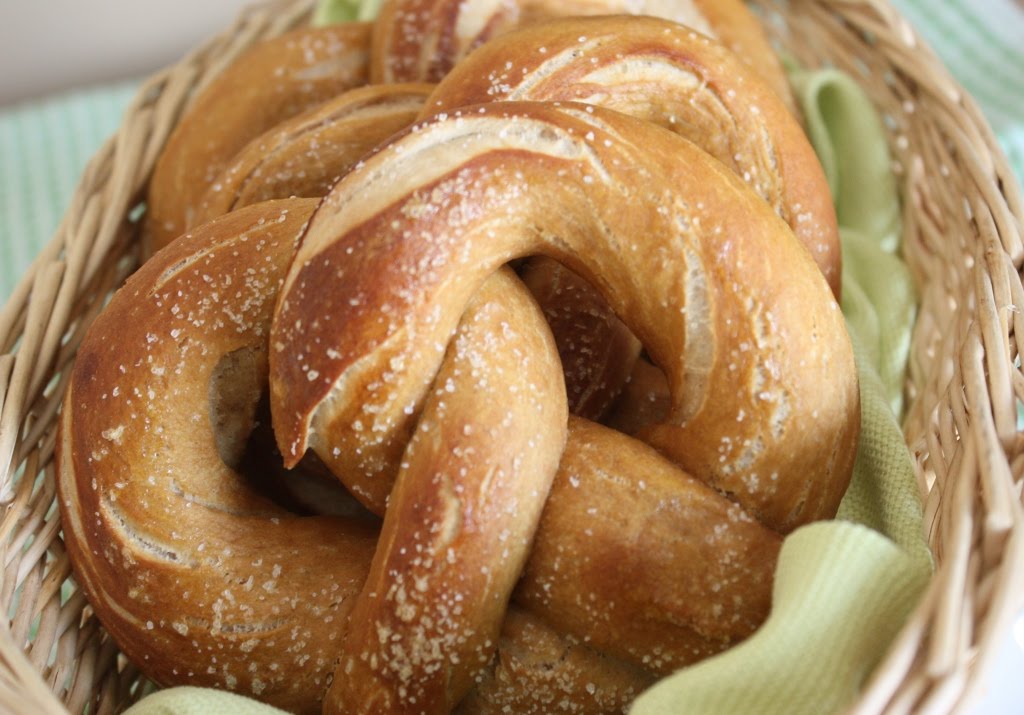
When I think about the things I associate with Easter, pretzels is typically not one of them. Hot-cross buns, chocolate, eggs, bunnies, and on a religious note, sacrifice, the cross and new life. No, pretzels really don’t make the list. Well, that was before I read about their history a couple years ago.
My interest in pretzels began when we traveled to Austria and Germany a few years ago. At that point I discovered one of my top five meals of all time – German sausage, kraut, mustard, a pretzel and beer.
It has to be from the source though, so traveling is required. A simple meal, yes, and likely very unexciting for many, but it tops my list. In many cases, I could just go for the pretzel, mustard, and beer, and believe me; in Germany they are large enough to be made a meal!
This is what sparked my interest in pretzels and I soon learned that their history is strongly associated with Easter. Well, actually, they are associated with Lent. As the story goes, pretzels originated in Southern France or Northern Italy when a monk was making unleavened bread for Lent. At this time it was common for arms to be folded across the chest when praying with each hand on the opposite shoulder. Does that vision look familiar?
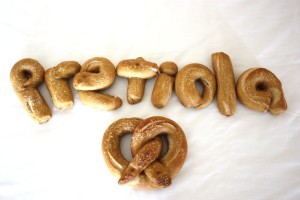
Such is the traditional shape of the pretzel. Supposedly this monk used the pretzel as a reward for children or other monks (each account is a bit different) who recited their prayers. Therefore the pretzels were first named “pretiola” which is Latin for “little reward.”
Another name associated with the pretzel is “bracellae” which is Latin for “little arms.” As pretzels made their way to Austria and Germany they became known as a “bretzel” or “pretzel.” Historically, aside from the association with Lent, pretzels symbolize good luck, long life and prosperity.
I’ve wanted to make pretzels for a while now, especially since I read about the history, and I decided that this Easter is the year for it. Traditionally, due to the strict Lenten fasting rules of the Catholic Church, breads made during this time were composed of only water, flour and salt.
Most pretzels today use more ingredients. For example, the one I set out to make is a recipe for Homemade Soft Pretzels by Alton Brown. As is typical of my baking, I made a few changes.
I used mascavo sugar in place of the white sugar and white whole wheat flour in place of all-purpose flour. I also didn’t have kosher or pretzel salt so I just used my finely ground sea salt, but used half of what the recipe calls for in kosher salt.
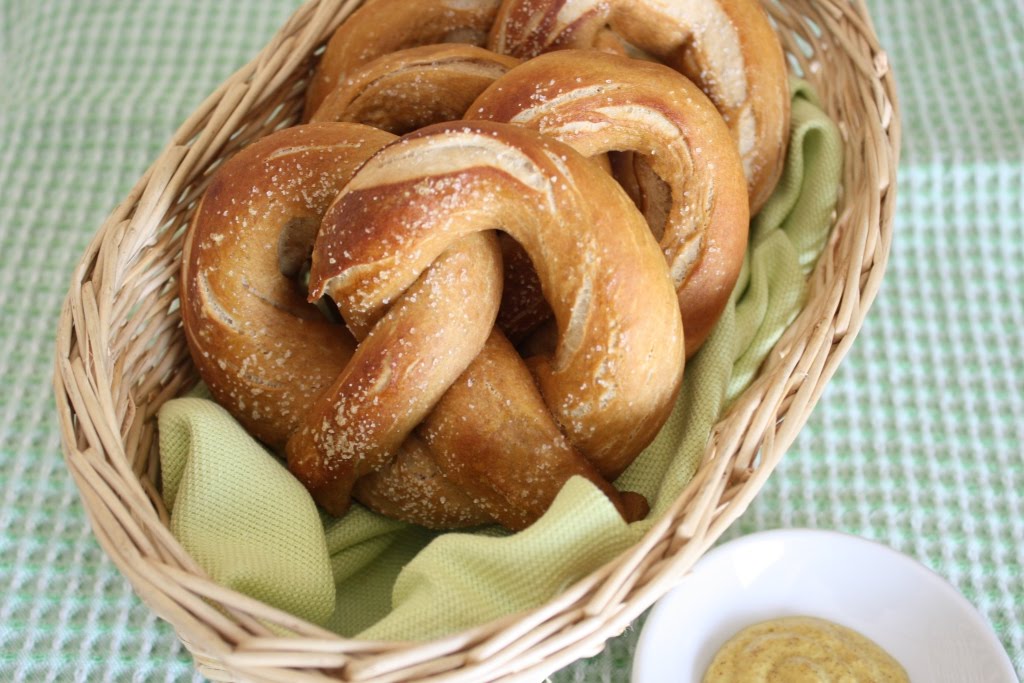
I was so happy that these whole grain pretzels turned out beautifully. They raised well, browned up nicely and remained soft and tender on the inside.
1 ½ cups warm water
1 tbsp of mascavo/muscavado sugar
1 tsp sea salt
1 pk active dry yeast (I used rapid rise)
4 cups white whole wheat flour
4 tbsp unsalted butter, melted
10 cups water
2/3 cup baking soda
1 egg yolk, beaten
1 tbsp water
Olive oil
Salt or other seasoning
Combine the sugar, salt and water in the bowl of a mixer and sprinkle the yeast on top. Let it sit for 5 minutes, it will begin to foam. Add the flour and butter and use the dough hook to mix the dough on slow. Gradually increase the speed to medium and let mix until the dough forms and pulls away from the sides of the bowl. This only took about 2 to 3 minutes for me.
Remove the dough and knead into a ball. Place the ball in a clean bowl and coat with olive oil. Cover and set aside in a warm place to let rise for about 55 minutes.
Preheat the oven to 425 degrees F. Bring the water and baking soda to a boil in a large soup pot. Separate the dough into 8 equal pieces and roll out each piece to about 24 inches long. Shape into a U, cross in the middle, and press the two ends into the opposite sides of the bottom of the U. In other words, make a pretzel shape however you see fit. Mix the egg yolk with the water in a small bowl and set aside.
Drop the pretzels in the boiling water one at a time for about 30 seconds. Remove after they float to the top. Place on a cookie sheet (four pretzels per sheet) covered with greased parchment paper or with a silicone mat. Brush the pretzels with the egg yolk mixture and sprinkle with salt or other seasoning. Bake for about 12 minutes or until golden brown. Cool and enjoy.
Eating these lovely treats is a far cry from a sacrifice, which is what I usually associate with the Lenten season. So that is why I think I’ll stick with the name “pretiola.” I will gladly take these as a little reward any time of year.
In fact, I like that name so much I decided to spell it out for you. So this pretzel experiment is being submitted to the Eating Your Words Challenge hosted by Tangled Noodle and Savor the Thyme.
Resources for more info about pretzel history:
Catholic Education Resource Center: Lenten Pretzels
CatholicCulture.org: Pretzels for God
The History of the Pretzel
Snyder’s of Hanover: History of Pretzels


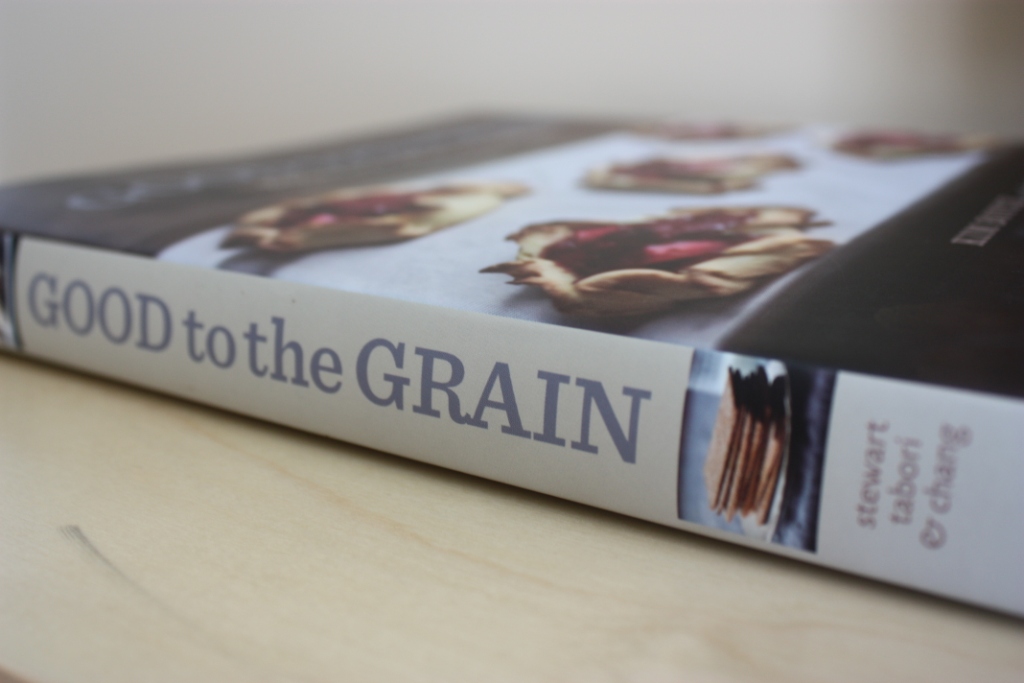
 , I knew I had to get my hands on a copy!
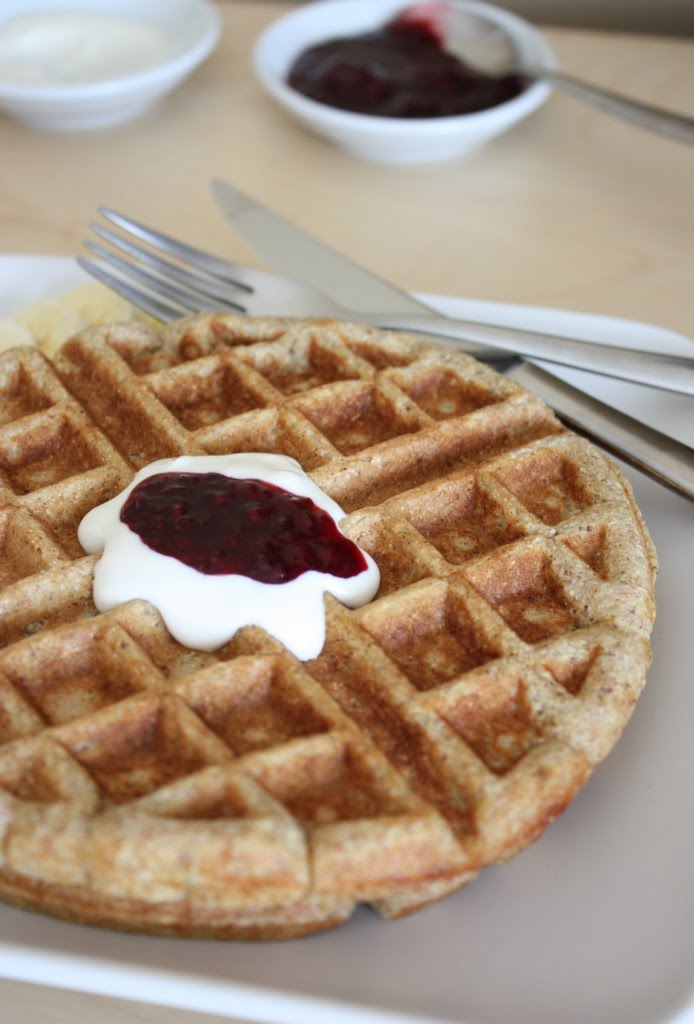

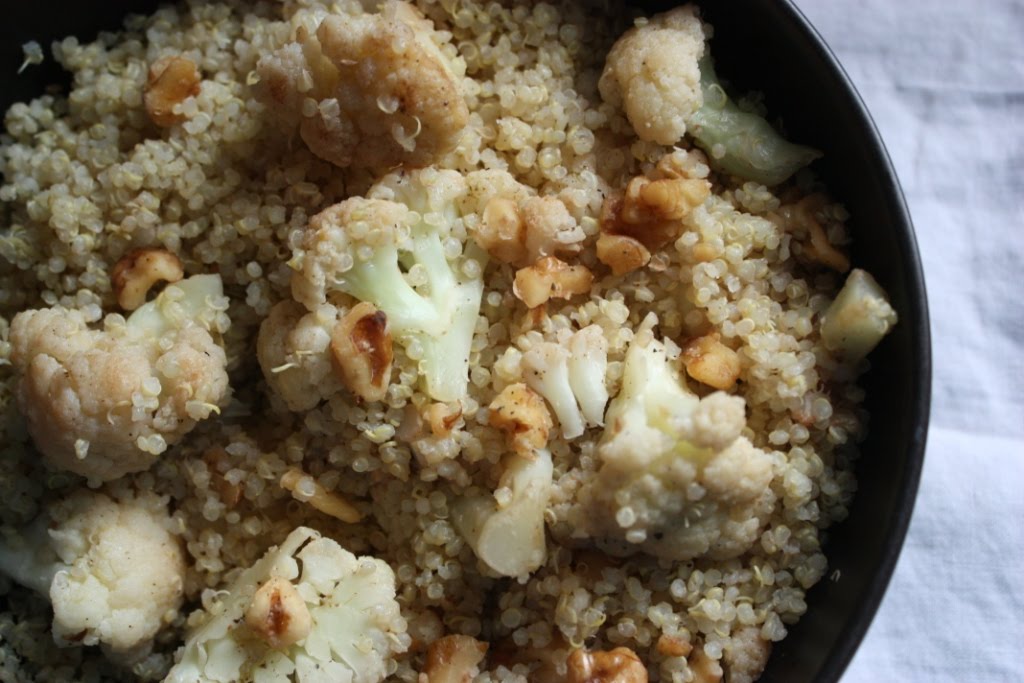
 (an incredibly inspiring and informative book even if you are not a runner, by the way), my husband’s request was an increase in dark, leafy greens and cruciferous vegetables.