Sagu de Vinho #24
August 28, 2009Most of the Brazilian recipes I Google pop-up on the first search page, but for Sagu I had to do a little more digging. I’m not sure if it has to do with the popularity of this dish, or that maybe it is more regional to the area we are living in. I say this because I happened to mention it to my host during my visit to Minas Gerais and she hadn’t heard of it before.
Sagu is basically tapioca pearls. It is served as a dessert around here and you can often find it among other sweets on per kilo buffets (which are the normal lunch for many Brazilians). Sagu can be made with only juice. However, I prefer the version made with juice and wine.
My husband’s coworkers have joked before that they loved it as kids when their grandmothers made Sagu because it meant they got to have a little wine. Although, considering the cooking process, I doubt there is much alcohol left in the final dish.
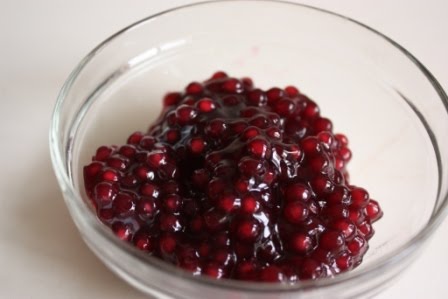
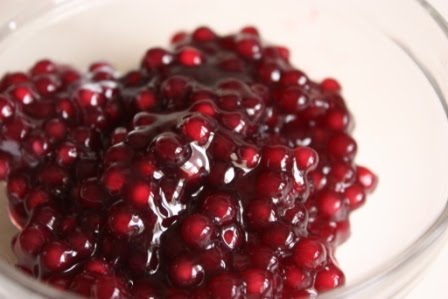
Sagu reminds me a lot of a jello salad (without all the artificial ingredients). The pearls become slightly chewy and the cooking process turns the liquid into a thick sweet sauce that has an intense tangy flavor from the concentrated wine. It’s good at room temperature or cold, but after it gets cold the pearls and sauce really solidify so it does become thicker and a bit sticky.
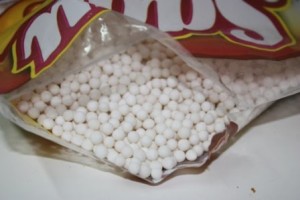
Since having Sagu out at restaurants I wanted to try it myself at home which is why I made it #24 on my 30 Foods List. Like most culturally specific foods there are different recipes for making it. Some cook the sagu in water before adding the wine or juice, others also include cinnamon and clove for flavoring. Me, well, I just followed the recipe on the back of the bag of tapioca pearls.


I think we’ve established that desserts in Brazil are sweet, really sweet. So it’s no surprise that in addition to a liter of juice the recipe calls for 2 cups of sugar! You’ll be happy to know that I left that out. I used ½ juice and ½ table wine, and knowing the juice had some sugar in it to begin with I knew it would be sweet enough for me and it was.
I think you should be able to get your hands on tapioca pearls in the States pretty easily so if you are looking for something a little different for dessert, give Sagu de Vinho a try.
1 cup tapioca pearls
½ liter grape juice
½ liter red table wine
Add all ingredients into a medium to large soup pot. Cook over low heat until the pearls become transparent and are cooked through, about 30 to 45 minutes.
A note to San Francisco readers and those headed to the Foodbuzz Fest:
I’m headed to the event and will be in the area for an extended period. If you want to meet up at some point to talk food, health and culture let me know!
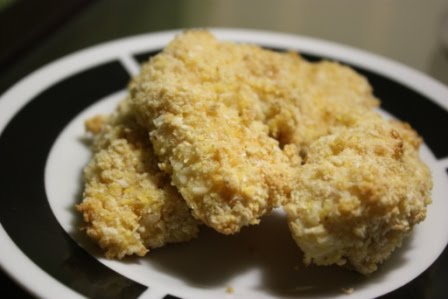
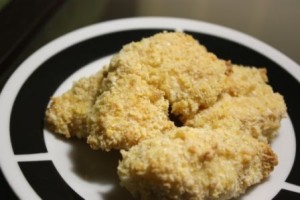
Simple Coconut Chicken
August 26, 20091 cup coconut milk
1 ½ cups bread crumbs (your choice – panko, whole wheat, gluten free)
1/3 cup flaked coconut
½ tsp salt
¼ tsp black pepper

Do you have any past recipes that you loved, but have completely forgotten about? Or am I the only one who can’t seem to keep my recipes straight?
Pots, Pans and Foodie Souvenirs
August 24, 2009First let me say I’m sorry about the lack of a Link’s post this past weekend. My travel, an unexpected cold bug and my husband’s return from a business trip to the Dublin area made for less than normal weekend. I haven’t been away from the computer, but I’m starting to feel the pressure of the upcoming Southeast Asia trip so that is taking up much of my time at the moment. Wow, do I have a lot more research to do about what to see and where to eat!

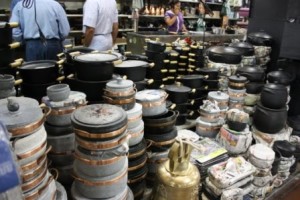
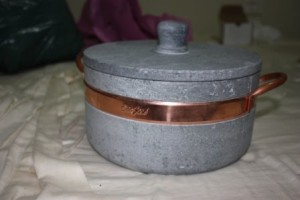
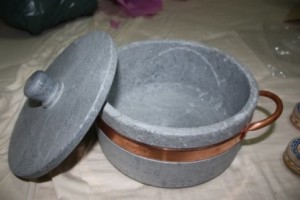
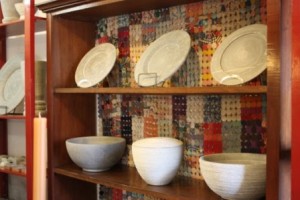
Where we are living in there isn’t a whole lot of this traditional cookware. We do get bamboo cooking utensils which I love, but pots and pans are more modern. This artisanal cookware was an exciting find, but it took me a long time to decide if I was going to lug back a pot. These suckers are heavy! I just had to take my chances though because I know I will likely not have the chance again.


The pot will turn black after I treat and seal it. Everyone tells me that it will keep hot food hot for about 4 hours and you can even use it with cold salads and it will similarly keep the food cold for an extended period. I’ll be sure to share the first meal I cook in it. I haven’t quite decided what that will be yet.
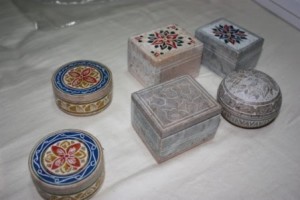
I only wish I could have brought back more. This pot I found at the central market in Belo Horizonte, but in Ouro Preto they had so many things made out of soap stone – soup bowls, wine holders/chillers, base plates and vases. I did manage to bring back a few carved soap stone boxes for Christmas gifts. Sorry for the spoiler if any of my family is reading!


Now on to the edibles.
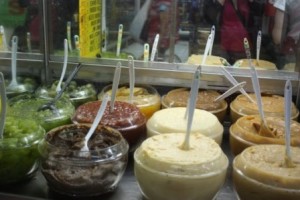
Minas has a lot of the same doces (sweets) that we have where we are living, but as I mentioned in my last post most are in a more liquid, scoop-able from. Just about every stall in the central market had a huge case full of sweets like this.
It included doce de leite, cocada, a combination of the two, chocolate doce de leite, guava fruit jam (goiabada) and many candied fruits like mamão and fig. And, oh yes, you get to taste any that you want.

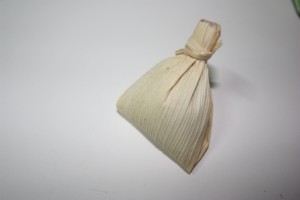
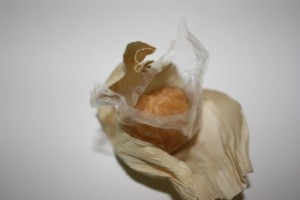
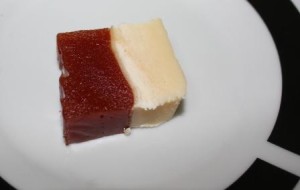
Then there are all kinds of packaged foods you can pick up like this doce de leite wrapped in little corn husks. The actual doce de leite isn’t much to write home about, but the package makes it way too attractive to pass up. Next, I picked up some packaged candy, similar to a fudge that combined a very lightly cooked doce de leite and firm guava fruit jam.


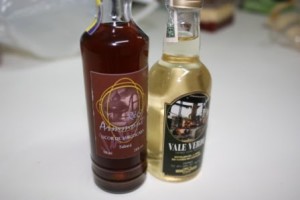
I also brought back a sample bottle of Vale Verde cachaça (a brand made outside the Belo Horizonte) and a sample of the Jabuticaba liqueur so my husband could give it a try.

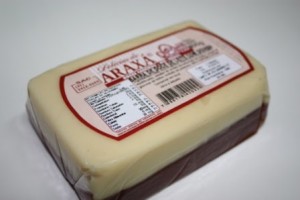
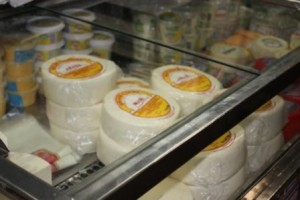
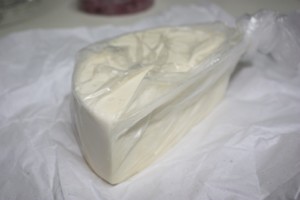
With all this sweet, something savory had to be included and that something was Canastra cheese. Most of us in the other states of Brazil are familiar with cheese from Minas because it is so well known across the country. I can always find Minas Frescal in the supermarket here which is a fresh, cow’s milk cheese. However, once it is matured Canastra cheese is created and what makes this special is that it is a regional cheese specific to Minas Gerais and the Serra da Canastra. If you want to read a little more you can check out this book excerpt from Brined Cheeses by A.Y. Tamime.


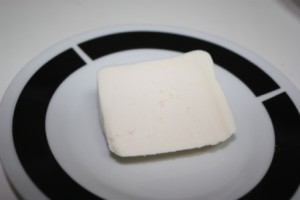
It is a soft, velvety cheese that immediately melts in your mouth. In my opinion it is similar in texture, but slightly firmer than, fresh mozzarella, but with a much sharper flavor. I brought a half wheel back, a little less than a kilo. I seriously can’t stay away from it. I keep trying to make it last, but every time I open the fridge door, there it sits. My favorite way to enjoy it is slightly melted over bread with goiabada.

After all this, you can imagine the luggage was quite heavy. It was a truly amazing food culture experience and I have plenty to remind me of it now that I’m back home.
Fortunately, this weekend the food party didn’t end there. I can’t finish this post without telling you about the goodies my husband brought back from Ireland to share with me. You see, I’ve been to Ireland with him the past two years and this year we decided I would skip out so we could put the funds towards our SE Asia trip. But even that trip and my wonderful trip to Minas Gerais didn’t leave me completely without disappointment that I failed to make it to Europe this year so my husband was there to help.
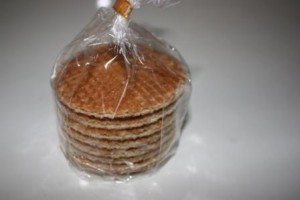
Guinness chocolate, toffees and fudge were part of the spread along with some Jameson to keep the liquor cabinet full until we depart in a month. He flew KLM so they had these amazing caramel wafers from the Netherlands via duty free. We first had these in either Vienna or Munich and they are amazing. A very thin wafer filed with salty caramel. We have found them at specialty stores every now and then in Lexington, but it has been a while.


Finally he packed back Bulmers!! This is my absolute favorite cider. It can also be found under the name Magners. Carbonated, fruity and crisp it is perfect for summer, but so good that it can’t be passed up even on the coolest or rainiest days while in Ireland. He picked up a couple of the pear flavored to try something different. It was good, but I have to say the original is the best.

So there you have it, foodie finds from around the world! This week I have some recipes lined up and I hope to get back to regular cooking if I can kick this cold to the curb. Thanks for walking back down memory lane with me through my trip recap. I hope you found something you enjoyed among all this great food!
Foods of Minas Gerais
August 20, 2009
Remember when the Internet was an incredibly scary place? When people would warn about being too visible and you felt as though you had to sneak around for fear that it was a world full of only the weird and unstable.
I’m so glad those days are gone! I mean, you still have to be careful, but the world of blogging, travel and food has been a wonderful thing. From the day I started my ex-pat blog, which expanded to this blog, I began meeting people; friendly, real people.
For the last few days I’ve been taking advantage of one of those connections I’ve made. Someone who reads my ex-pat blog invited to me to visit Belo Horizonte and Ouro Preto in Minas Gerais, Brazil. Not only did I get to meet her and her family, I also got to meet another ex-pat family living there.

It was a wonderful trip filled with lots of history, a part of this country that I was sorely lacking. This included a history of both food and some things related to cooking. It was such a great experience to try some new foods, and some of the foods I’m familiar with prepared in a different way.
I thought I’d first share with you some of the best meals I had highlighting those things that are specific to that area of the country. In my next post I’ll expand to some of the food and cooking related goodies I got including those from the central market.
Before my trip everyone kept telling me that Minas food is very different. Looking back, I wouldn’t say it is very different because many of the same ingredients are used here. However, there were some dishes that I was able to taste for the first time, some of which I’ve never seen on the menus in Maringá, or at least I didn’t know them well enough to order them and they aren’t that visible on the tables around us.
While I was in Belo Horizonte we took a trip to Ouro Preto, a city I’ve been interested in since seeing a documentary on it before our move. It is only about 1.5 hours away so a great option for a day trip.

This place holds much of the history of the country and if you travel to Brazil I’d highly recommend making your way there. Yes, I’d even suggest skipping a few days at the beach for it. It was simply amazing with cobblestone streets, village-like architecture, historic museums and churches filled with ornamental gold-leaf. It reminded me a lot of Prague and it is where much of the gold mining was done for that which was then sent to the Portuguese Crown.

While I learned about the history, I’m not the best at creating the written word to capture it for an interesting story. If you want to learn more, head over to the Salty Cod. Mallory recently visited and has an extensive post about the history of the city and some amazing photographs.
It was in Ouro Preto that I got to try food that is specific to Minas Gerais. I was interested to learn from Emily, one of the U.S. ex-pats I visited there, that the food is very similar to that which we find in the southern U.S. It makes sense due to both areas having a strong African influence.
For lunch we went to Chafariz, a somewhat touristy spot which specialized in Minas cuisine. When I use the word touristy I mean that to say that a lot of Brazilian tourists eat there and you can find it mentioned on travel guides like Frommer’s. I don’t mean it to say it has been altered to be appealing to a variety of tastes like many touristy establishments. This is the authentic version for sure.


We started with a small shot of local cachaça that came with the meal. You know I’m not a huge fan of it, but this variety was actually pretty good. It was followed by Caldo Verde a soup found in both Portuguese and Brazilian cuisine. It has a thick broth and is filled with couve (collard greens), potatoes (usually mashed into the broth) and pork or pork sausage. It was also served in soap stone bowls which I will explain more about in my next post.
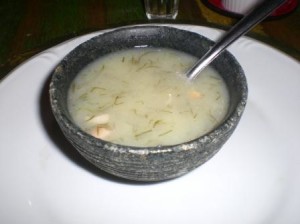
I have had this soup before and the one we had at Chafariz was one of the best I’ve tried. I have attempted to make it before, but I can’t get it quite right. You can check out this recipe from Pink Bites if you are interested in trying it yourself.
My goal was to try everything new to me, or that was prepared in a way I was unfamiliar with. Well, except for rice and farofa. A Brazilian meal just wouldn’t be complete without those. I did pretty well on the first plate, but I did have to go back for a tiny follow up to get it all in.
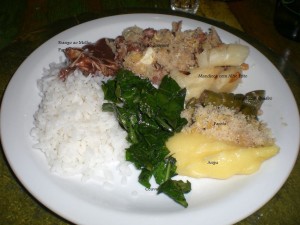
The first thing that caught my attention when the cuisine was being explained to me was Frango ao Molho Pardo (chicken in brown sauce which is actually blood sauce). This was very good, kind of like a beef stew with chicken. I have to admit the thought of the blood does bother my mind-to-stomach system after I think about it for a while, but I wanted to try it out and I’m glad I did.
I’d read about Frango com Quiabo (chicken with okra) after we first moved and while I’ve seen okra on some occasions at the market, this dish doesn’t stand out in Maringá. I was looking forward to the opportunity to try it. The way the okra is cooked makes it tender, but allows it to maintain a slightly firm texture without being mushy and the seasonings are outstanding. By far the best way I’ve had okra.
Feijão Tropeiro was a combination of beans, farofa, fried egg, garlic, onion, bacon and sometimes sausage though I’m not sure I got a piece of that in my taste. Each ingredient is cooked separately and then combined so each holds its own shape and texture. No mushy stuff here. I loved this. It was my kind of all-in-one dish. It is often equated to trail food or cowboy food. Just to pass on the history lesson I received the tropeiro was used to take the gold from Ouro Preto into other areas of Minas Gerais and the whole process was executed through the use of donkeys and mules.
The other things on my plate included angu (polenta, more of a cornmeal mush) and couve which was sautéed with garlic. I really like the couve this way because it changes the bitterness compared to the fresh couve often served and gives it a more complex flavor. I’m not a big fan of the polenta because it is cooked in such a way that it is more of a sticky paste. Then I couldn’t pass up the steamed mandioca com alho frito (fried garlic) because I love the flavor of the fried garlic.
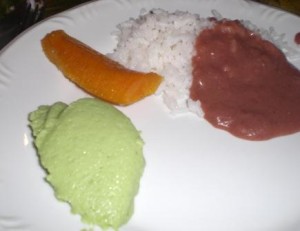
My second trip I got very little because I just to try out what I missed the first time. The bean paste is Tutu à Mineira which is similar to refried beans and has been mixed with mandioca flour. It has a sticky, pasty taste similar to the polenta. The interesting green fluff is Mousse de Pepino (cucumber). I’ve never had anything quite like this before. It had that refreshing taste that you’d expect from a cucumber and a slightly grainy texture. It was a unique flavor, but for me, only good in small doses. I rounded out the plate with a slice of cooked banana.
The doces (sweets) in Minas are similar to what we have here, but they are often served in a more liquid, scoop-able from. Therefore, you will find bowls full of doce de leite, cocada (coconut with sweetened condensed milk), candied fruits like the fig I have there (the green stuff) and they also serve the goiaba (guava fruit) in a candied jam form or in a solid form with a gritty texture. This variety is also served with local cheese. Of course, there is little I can fault with the sweets.
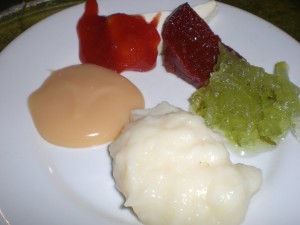
The meal was followed up with a cafezinho (strong, dark coffee) and a small taste of local Jabuticaba liqueur.


I don’t think I’ve talked about Jabuticaba before. It is a small, dark purple fruit, a little larger than a concord grape. The outside skin is smooth and shiny, inside is a white, opaque pulp with a fairly large seed. Its textures are very similar to a wine grape, but the flavor is simply sweet. It isn’t distinct to me, just sugary sweet and the liqueur was the same way. We can buy it (and grow it) here, but I don’t even think I’ve taken the chance to get a picture of it. Hopefully the Wikipedia page will help.
Links to a Healthy Weekend
August 15, 2009Don’t (White) Sugar-Coat It had a post about a recent visit to the farmer’s market which featured a Brazilian vegetable that I haven’t had yet. The Maxixe is a small cucumber with a lemon flavor. I have seen this name before (although I think it may have been spelled differently), but haven’t branched out to purchase some. Just the other day I read about the lemon cucumber and had no idea that it might be the same thing. They are going in my bag if I can find them again!


Culture-filled Friday: Strogonoff de Frango
August 14, 2009
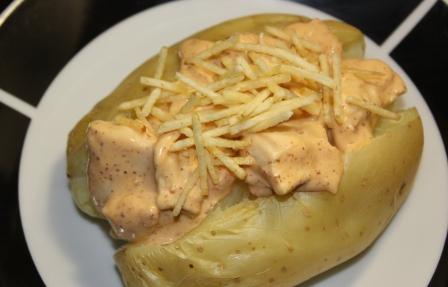
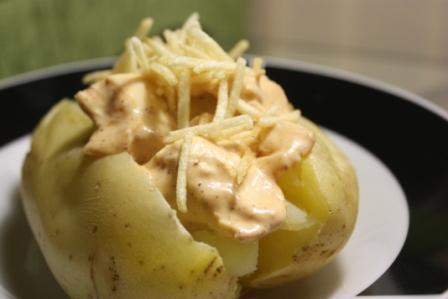
For some reason I feel the need to introduce this recipe with a bit of explanation. Now, if I were one to associate negative terms with food I might call this post “Fattening Friday”. However, I try not to do that because I feel like even high calorie, low produce cultural foods should be savored. So instead I’ll go with “Culture-filled Friday” because if there is one entrée you will find on almost every menu in town it is Strogonoff de Frango (Chicken Stroganoff).
To be honest, the recipe I ended up finding for the chicken variety was tasty and this is coming from someone who isn’t the biggest Brazilian stroganoff fan. Something I think made a huge difference is that I had some spicy brown mustard on hand and I used it instead of yellow. It gave the dish a robust, tangy flavor that really stood out. I’d recommend that substitution. I served ours over potatoes because I had a few that needed to be used up.
1 clove garlic, minced
2 tbsp mayonnaise
1 tbsp butter
1 medium onion, finely chopped
½ cup ketchup
1/3 cup mustard (I used spicy brown)
1 cup jarred mushrooms, sliced
1 cup heavy cream (original recipe calls for crème de leite so if you can get the Nestle table cream often found in Latin food markets, use that)
Match stick potatoes

Gorgonzola & Black Rice Stuffed Peppers
August 13, 2009
Growing up, I never really liked my mom’s stuffed peppers (sorry Mom). I’m not sure what it was about the combination of tomato, rice and beef, but it was never appealing as a kid. Now, I enjoy those flavors more, but when it comes to stuffing veggies I like to branch out and try some different combinations.
I picked up some green bell peppers at the market last week. While the red and yellow varieties are much more to my liking, I often buy green to toss in recipes and to top our salads. Bell peppers in general are full of vitamin C and vitamin A, and I figure a few extra antioxidants here and there certainly can’t hurt.
I also learned an interesting tidbit of info when I was refreshing my nutrient knowledge. By the way, I typically research foods on WHFoods.com. It is such a great site that pulls together the latest research articles on all kinds of foods. Anyway, apparently bell peppers contain a recessive gene that eliminates the compound capsaicin which is responsible for heat in other varieties of peppers. I guess I found this especially interesting because I’m not all that familiar with the dominant and recessive genes of my fruits and veggies.
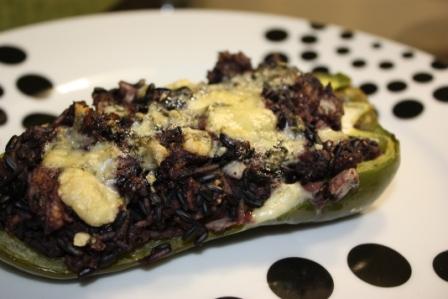
Moving on. Instead of adding these peppers to another dish, I decided a stuffed pepper sounded good for dinner last night. Given my so-so view of the traditional stuffed pepper, I took stock of what I had available and got to work. I had some black rice that needed to be used up. I love Gorgonzola cheese with walnuts so that gave me the idea that the nuttiness of the black rice might go well with a sprinkle of the cheese.
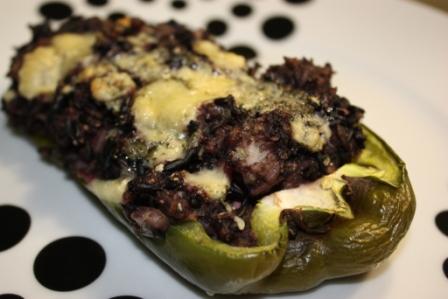
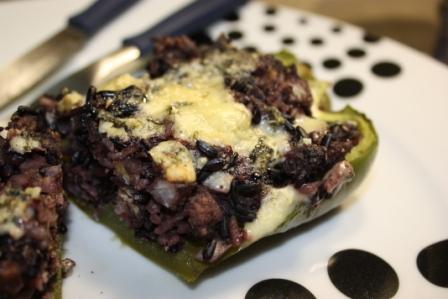
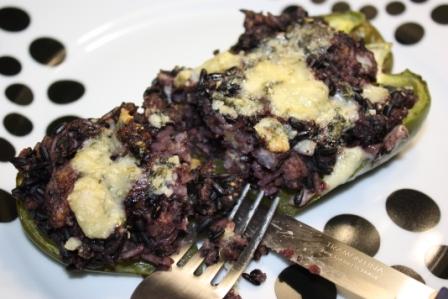
What I ended up with was a green bell pepper stuffed with black and long grain white rice, topped with savory Gorgonzola. The flavors went so well together – lightly nutty and salty with a touch of sweetness from the pepper.
I have a feeling this will now be my go-to recipe for stuffed peppers. My husband enjoyed it because the texture had a hearty, meaty taste without the dish actually containing meat. It is an ideal meat-free dish to incorporate into your week.
Gorgonzola & Black Rice Stuffed Peppers
4 small round green bell peppers, or two longer peppers
1 cup cooked long grain rice (wild or brown would work too)
¼ cup onion, finely chopped
2 cloves garlic, minced
¾ cup bread crumbs (white, wheat, spelt)
¼ cup chicken stock
½ cup cooked black rice
1 egg, beaten
½ tsp salt
¼ tsp black pepper
2 oz Gorgonzola cheese, crumbled
Preheat the oven to 350 degrees F and lightly coat the surface of a square glass baking dish with olive oil. In a large bowl mix together the white rice, onion, garlic and bread crumbs. Add in the chicken stock (or use water if you prefer a vegetarian option) and stir to moisten. Stir in the black rice (this will turn the mixture a dark purple). Mix in the egg and season with salt and pepper. If the mixture is too dry to stuff the peppers add a little more chicken stock.
Cut the tops off of your 4 round peppers or split your 2 longer peppers in halves. Clean out the seeds and large veins. Place them in the greased baking dish and fill each with the rice mixture. Top each with an equal amount of the cheese by pressing the crumbles into the rice. Bake for 45 to 60 minutes, until the pepper begins to brown and is tender. Serves 4.
Local Pineapple & Morning Glory Bread
August 11, 2009It’s been such an exciting experience to have foods I once considered exotic or tropical become local and in-season. I mean, five years ago I never would have imagined that I’d be living in a place where I could get pineapples at my local Farmer’s Market (Feira), but that is exactly where I’m at and what I do.
Pineapples are popping up at the market and disappearing as fast as they are set on the table. I was waiting for my husband to meet me after work the other night. I ended up standing around for about a half an hour and during that time I watched a 10 foot table covered in pineapples stacked three and four high dwindle down to about 15 individual pineapples.
When we finally decided to get some for ourselves the farmer was getting ready to close up shop. We picked out two we liked and he threw an extra in because he didn’t want to take any back home. We ended up with three pineapples for R$5 which is just a little over 2.50 USD. We even got this special one – a double topper!

So I’ve been using up pineapple quite a bit over the last week and most of it has gone into juices. However, with one remaining in the fridge, I felt the urge to bake something with it. As I was doing some magazine reading over the weekend I came across a recipe for Morning Glory Muffin Bread from Southern Living. We used to make Morning Glory muffins at the bakery I worked in, but it’s been years since I’ve had it. Considering the fact that I don’t have muffin tins here and the recipe was for bread, it was settled.
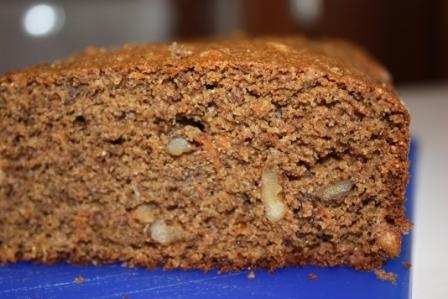
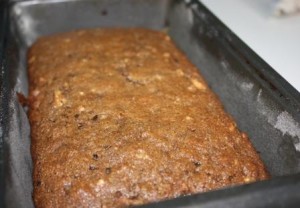
I altered the recipe using extra virgin olive oil, walnuts, pumpkin pie spice, whole wheat flour and mascavo sugar. Then, of course, I used diced fresh pineapple instead of canned crushed. It turned out great and I just love the way the bread is slightly savory, but then you bite into a flavorful pocket of sweet pineapple, a raisin or tender carrot. It is a great energy-dense, nutrient-rich breakfast bread!
Morning Glory Bread 
Adapted from Morning Glory Muffin Bread from Southern Living Magazine March 09
½ cup chopped walnuts, toasted for five minutes and cooled
1 ½ cups whole wheat flour
½ tsp salt
½ tsp baking soda
½ tsp ground cinnamon
½ tsp pumpkin pie spice
1 cup mascavo sugar
1/3 cup extra virgin olive oil
2 eggs
1 tsp vanilla
½ cup fresh pineapple, diced
½ cup carrot, shredded
½ cup golden raisins
Preheat oven to 350 F and grease and flour a large loaf pan of about 8 x 4 inches (mine is a little larger). In a large bowl combine the flour, salt, baking soda, ground cinnamon and pumpkin pie spice. In a medium size bowl whisk together the sugar, olive oil, eggs and vanilla until combined. Stir in the carrot and pineapple. Pour the sugar mixture into the dry ingredients and stir just until the dry ingredients are moistened. Incorporate the walnuts and raisins.
Transfer to your prepared loaf pan and bake for about 45 to 60 minutes or until a toothpick inserted in the center comes out clean. Cool for 15 minutes, de-pan and allow to cool completely. Makes about 12 servings depending on the size of your slices.

Because I kind of like corn…
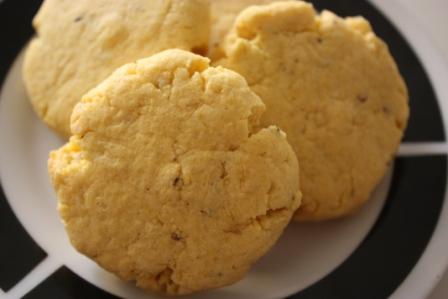
August 7, 2009It took me a while to figure out the exact origin or makeup of fubá . By the way it is pronounced fu-BAH, with a big emphasis on the BAH. Most sources equate it to cornmeal in the U.S.; however it is a very fine cornmeal. It is used as a flour here and can be found in the form of cakes (bolo de fubá), cookies (biscoitos de fubá) and, according to a recipe on the package, even soufflé.
I wanted to try making some things with fubá so over the past couple weeks I gave the cake and the cookies a try. I also should mention that I didn’t do any playing around with different (i.e., less processed) ingredients because I really want to try the original first.
The cake was once given to us as a gift and I’ve had it at parties, so I was able to compare what I ended up with. I baked it in a loaf pan instead of a Bundt or sheet cake pan and I really liked it like this. I could enjoy it as more of a bread. It is similar to a sweet cornbread, although not as course and the butter makes it incredibly rich. It is one of those cakes that can very tempting for breakfast with some coffee.
Bolo de Fubá 
200 grams butter, softened
1 cup sugar
2 eggs
1 cup fubá
½ cup all purpose white flour
½ cup milk
1 tsp baking powder
2-3 Tbsp finely ground, unsweetened coconut

When searching for recipes on the web, I found a ton, all with something a little different. So I decided to take the easy route and go with the simplest one. They are not exactly like the ones we’ve had at the bakery regarding texture, as shown in the picture above, but the flavor was just as tasty.
Biscoitos de Fubá
Adapted from Tudo Gostoso
1 ½ cups Fubá
½ cup all-purpose flour
½ cup sugar
2 egg yolks
½ Tbsp anise seeds
½ cup butter, melted
¼ cup milk
Preheat the oven to 350 F. Stir the fubá, flour, sugar and anise seeds in a mixing bowl. Add the egg yolks and butter and mix well until the dough is dry and crumbly. Add enough milk to make the dough stick together so that you can form a ball. This was about ¼ cup for me.
Roll the dough into balls about the size of a golf ball. Place them on an ungreased cookie sheet, 12 per standard sheet pan. The original recipe includes the step of rolling them in cornmeal first, but I didn’t do this. Flatten the cookies by hand or with a glass. Bake for 10 to 12 minutes until the sides and bottoms are lightly browned. Remove from cookie sheet and cool on a wire rack. Makes about 18 cookies.
So I’m wondering – have any of you who frequent ethnic/cultural markets come across something similar to Fubá? I’m interested if I can find a similar product when I’m back in the U.S.
Also, for a great variation of Bolo de Fubá check out 5 Star Foodie (winner of the Mango Challenge and box of Brazil goodies ).