Monthly Archives

July 2009

Cowboys and Cow Ribs

July 13, 2009

Imagine if you were attending a local festival celebrating your culture. Perhaps it is a bit of a mini-family reunion where your extended family has traveled to join in the festivities. As you are seated around your table waiting for food, someone approaches the table to tell you that there are foreigners present and they need a place to sit.

Would you welcome them to your table?

Let me tell you about my Sunday.


Early in the week we had been told by some friends about a festival taking place just outside the city. Costela ao Fogo de Chão festival, or more a way of cooking and eating, that celebrates the Brazilian Gaucho, cowboys typical to South America and from what I’ve learned most prominent in the south of country. You will likely hear of them in Argentina too which creates a bit of a rivalry from what I hear.

We made the decision to attend the festival after Sunday turned out to be a beautiful day and arrived to look around, not exactly sure what we were in for. We knew the costela (ribs) were a big draw, but we didn’t know what else was involved. The day turned out to be quite the cultural and culinary adventure, one we weren’t at all expecting.

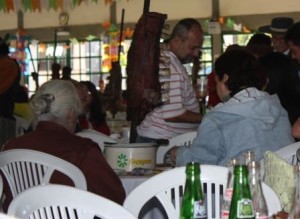
We soon found a gymnasium-type facility decked out in colorful decorations, overflowing with people and filled with dinner tables. In the middle of each table was a round base, and in this base was a massive piece of cow rib.
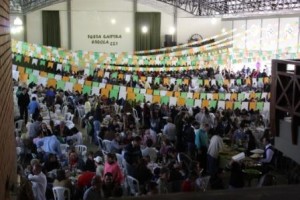

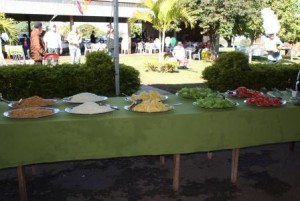
Throughout the dining rooms there were tables set up with vinaigrette (tomatoes with onion, lime juice and parsley), lettuce, mandioca (yucca, manioc), rice, farofa (toasted mandioca flour with bacon, onion and corn) and rolls. The idea was to surround your table with family and friends, fill your plate from the salad bar and then feast off the slab of ribs elevated in the center of the table.
We weren’t exactly sure how things worked. Many of the tables were reserved and we had started to think that it was a private event or maybe that we needed to have made reservations. Finally we saw a gentleman dressed in gaucho attire and we decided to ask him what we were supposed to do and if we could eat.

Immediately he asked us if we were German (as usual). My husband told him we were from the US and from that point things just happened so fast. Before we knew it he had grabbed a lady who happened to be an English teacher. She was asking us if we had someplace to sit and told us to hold on while she found the boss.

It turns out that the boss was the head of the CTG (Centros de Tradições Gaúchas) organization. He appeared very happy to see us and in a few minutes we were directed to the table of his family. As it turned out two members spoke English and even though my husband told them he spoke Portuguese and I spoke a little they continued to communicate with us in English. Incredibly hospitable, in my opinion. They were having a bit of a family reunion and let us know that their family was from Rio Grande de Sul (known for gaucho traditions) and had moved to both Curitiba and Maringá.

I have to say it was the most welcoming, gracious experience I have had in our two years here. Looking back, the whole event and how we were treated was unbelievable. Here we were complete strangers, foreigners at that, and we were simply wondering if we could get a table to eat. They welcomed us to the experience, and were clearly excited for us to witness a piece of their culture. We were even addressed during the announcements!

So let’s talk about this costela (the rib meat of the cow) as it was certainly the main attraction at this event. Our new friends told us that the ribs are salted the night before and then the cooking begins about 5:00 a.m. over the open flame. That means they cooked for about seven hours before making it to the table. Fogo de Chão, which you may be familiar with because it is the name of a popular chain of Brazilian restaurants in the US, is roughly translated fire of the floor, or fire of the earth.
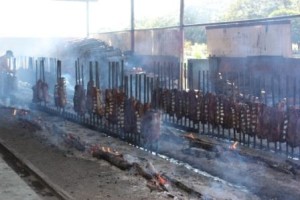
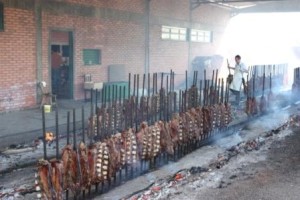
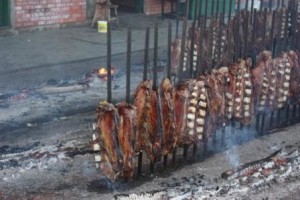
The meat was coming out all over the place, and if you weren’t carefully, chances are you would get bumped in the backside with a big slab coming out on a long metal pole with a sharp hook which the meat was attached too. From there, on the table it goes and the designated carver slices off pieces for everyone around the table.

The meat itself was just okay. This was much more about the experience itself. It was very, very fatty and resembled a roast beef like my mom makes at home with the carrots and potatoes. I can appreciate the fact that it is loved around here though. I just can’t eat it like most Brazilians do, fat and all. I carefully picked around the fat to get to the better meat. As is the case at most parties here, a second portion was practically forced upon us, but after that I was done for sure. The rice, vinaigrette and farofa were much more to my liking.

At dinner the family was telling us about their horse. He was described as a champion and after we ate we went out with a large group of people to walk through the stalls and take some pictures of him. We were met by a barn full of horses, some wanting a bit of attention, others content to eat their hay and still others a bit moody.

The champion’s name turned out to be Zeus. Zeus fully met the criteria of being a self-confident champion. He was bit irritated at being bothered during his hay munching. As one of the men teased him a little, I have never in my life seen a horse practically bust through a stall gate to try to bite someone. Zeus may have been beautiful, but he was not all that friendly. In fact, they closed up the stall and I didn’t even get a picture. He looked like his day was going bad enough already and I didn’t think a photo would sit too well given his current mood.

We did meet some other friendly horses. The names were the best part because many of them were in English. My husband really liked Cowboy.
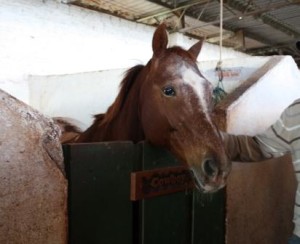
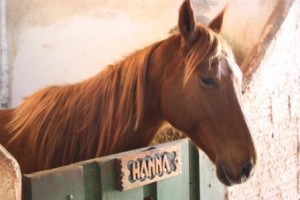
Hanna was my favorite; a sweet girl with her head out of the stall welcoming anyone who passed by to give her a scratch. I couldn’t help but laugh when two young boys walked up to give her hay and started calling her Hannah Montana. Apparently she is popular here too.
What a completely unexpected day. In fact, until about 10 minutes before, we weren’t even sure we would go. I’m so glad we did and it makes me wonder if I’ll ever have the opportunity to return this type of hospitality and cultural experience to a complete stranger someday.


This culture and culinary experience was a good fit for both my blogs so you’ll find this cross-posted at Blondie in Brazil.
Links to a Healthy Weekend

July 12, 2009

Has this weekend already come to an end? It is Sunday evening around here and pretty hard to believe. I had a weekend full of culture which I plan to share with you more throughout the next week.
As I kept up with my reading throughout the week I came across a few fun things that I couldn’t pass up sharing, even if this weekend is almost over.
Night Owls May Benefit from Evening Strength was an article on CNN this week reporting on a study about night owls and early birds. I am happy to have found some scientific support for my inability to be an early riser and exerciser. I have much more energy in the afternoon and evening.
On a similar note, Living Healthy in the Real World had a post about Sleep vs. Exercise. Which would you choose?

Tokyo Terrace, a great food-inspired blog written by a US ex-pat living in Japan, shared a beautiful spread for an easy, elegant brunch. As an ex-pat myself, brunch is one thing I miss dearly. I didn’t have it often, but there is something about the combination of breakfast and lunch in a relaxing atmosphere with friends that I really enjoy.

My Food and Life Encounters posted a recipe for Feijoada. I believe I’ve posted a recipe from her lately, but I couldn’t pass up sharing this one as well. Everyone asks me in one way or another about feijoada when they find out I live in Brazil. The two seem to be inseparable.

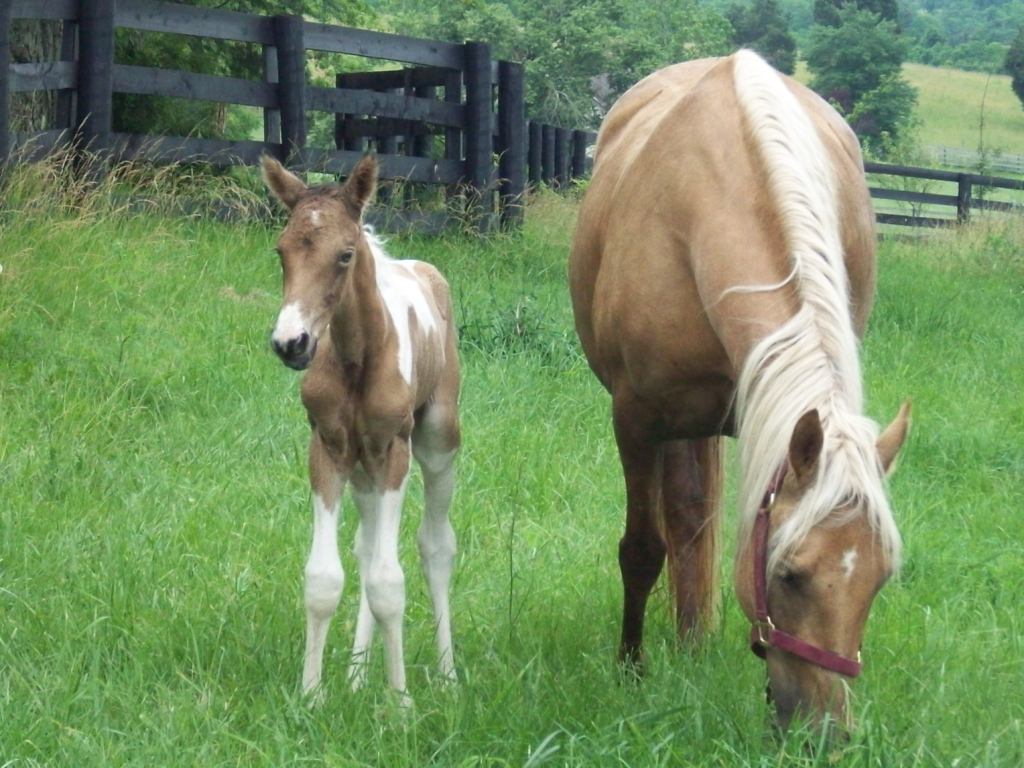
Photo of Gidget born in June with mom Marylin. The horses of my dear friend, Jackie.

Zucchini Quiche with Whole Wheat Crust

July 9, 2009

There was a time when the egg yolk rarely made it into my diet. I hastily followed the crowd when this food made the spotlight for being high in cholesterol. The truth is I enjoy egg whites just as much as the whole egg. I also tend to enjoy just eating the white and not the yolk when eggs are hard boiled.
However, I disliked that nagging voice in my head telling me that I shouldn’t be enjoying the whole egg on rare occasions. Fortunately, as seems to be happening with a lot of foods previously labeled unhealthy, the nutrition news changed and eggs came back as being a food now known for its healthy attributes which outweigh any nutritional shortcomings.
I gradually started eating the whole egg again and said good bye to that nagging voice. I knew my great grandfather couldn’t have been all wrong considering he lived into his 90s and ate almost a dozen fresh from the farm eggs a day.
The main thing that got my attention concerning health and the egg was choline. Egg yolks are one of the richest sources of choline, which is part of the B vitamin family. The most important benefit for me being that it is necessary for brain health.
I have eggs often and many times I will include one yolk and multiple egg whites when I just want the protein, but don’t want a lot of calories. The whole egg has about 70 while the white has about 17. That way I can still benefit from the choline and have a filling meal with a lot of protein.

One of the best ways to use whole eggs is in a quiche. I have always enjoyed quiche with its buttery crust and airy texture. You can also fill it with all kinds of vegetables and flavorful cheeses which is a huge bonus.

Earlier this week I had a zucchini that needed to be used up so I decided shredding it for a quiche would be a great way to enjoy it. I also had some smoked provolone cheese which is one of the better cheeses I find here and offers so much flavor to many of the things I make from pizza to a green salad.
But what about the crust? I wanted something partially healthy, but still rich and buttery. I haven’t had access to a rolling pin for two years. It is tucked away in a storage unit in the US, so I’ve become a big fan of pat-in- the-pan crusts. I decided to take the one I regularly use from the Joy of Cooking and make it whole wheat.
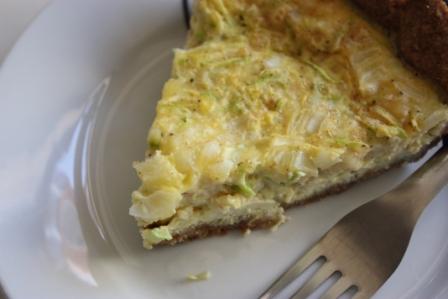
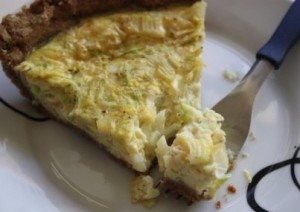
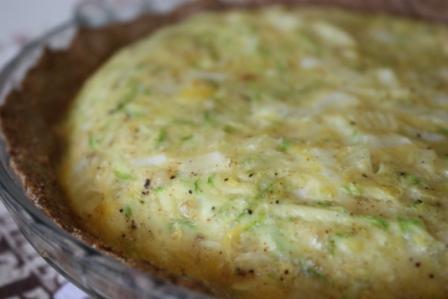
It turned out great! Still buttery, but with a crumbly texture and a flavor that really paired nicely with the eggs, veggies and cheese. In fact, I think I am going to attempt at making a sweet version of it soon for a pie adding some spices such as cinnamon and nutmeg.
Zucchini Quiche with Whole Wheat Crust

1 ½ cups whole wheat flour
½ tsp salt
½ cup butter, softened
Milk
¼ cup onion, finely chopped
¾ cup zucchini, shredded
1/3 cup smoked provolone, shredded
4 eggs
1 tbsp flour
1 cup of milk
½ tsp salt
¼ tsp black pepper
½ tsp cumin
½ tsp hot paprika
Preheat the oven to 350 degrees F. In a bowl mix together whole wheat flour and salt, cut in the butter and mix with a fork or pastry blender until butter is incorporated and dough is crumbly. Slowly add milk, one tablespoon at a time until the mixture forms a dry, yet cohesive dough. Press the dough evenly into bottom and sides of a deep, 9 inch pie pan.
Sprinkle the onion, zucchini and cheese evenly over the crust and set aside.
In a bowl or in a blender combine the eggs, flour and milk. Mix well with a whisk or in the blender. Add the remaining seasonings and whisk or blend again until the mixture is somewhat frothy. Pour the mixture over the vegetables and cheese in the pie crust. If your pan is not deep enough you may want to cut back on the milk to make less egg mixture. Leave at least a ¼ inch of crust visible around the edge.
Bake for about 45 minutes to an hour. The egg will rise a bit and the top should be slightly browned and the center set. Allow to cool for five minutes, slice and serve. Makes six to eight servings.

Becoming an In-Season Eater

July 7, 2009

I know you’ve read the advice as much as I have; in a book, a magazine article. I’ve even shared the advice a time or two. Eat in-season.
On the surface it is easy to determine what this term means. Eat foods when they are at their freshest, when they are harvested in your particular part of the country or world. Why? Well, because this is when they are at their flavor and nutritional peak. So we strive to eat asparagus and berries in the spring, squash and green beans as the summer rolls on and sweet potatoes in the autumn.
If you live in an area with access to CSAs and farmer’s markets it is easy to shoot for this goal of eating in-season, but it is likely that we eat in season in combination with eating out of season. There is likely something we pick up from the supermarket during an off season just to create a particular recipe.
However, what if one chose to eat only in-season? What exactly would this mean, and more importantly how would it affect one from a nutritional and health standpoint?
This is something that has been on my mind a lot lately. I really admire those people I follow who get a CSA box all summer and eat only from that box creating wonderful recipes. That is truly part of the eating in-season equation. And let me say this first off, the idea of eating in-season where I live now is a bit of a joke. While specific fruits like mangos and guava, and veggies such as corn do have a distinct season here, most everything else grows year around. Eating in-season in southern Brazil involves no sacrifice.
I’m looking at choosing this eating style when I return to the US though. I will be back in a place that has 4 seasons and the availability of fresh foods varies widely to the point of becoming non-existent in the winter. However, my belief in the importance of eating in-season is growing by the day. It is often better for the environment and honestly a bit of a challenge when it comes to cooking; one which I am up for.
As someone who cares a whole lot about nutrition though, this is where my concern lies whether it is well grounded concern or not. That is what I’m trying to figure out. In the summer, an in-season diet is obviously full of produce. Those recommendations to eat a variety of fruits and veggies in a variety of colors is easy fulfilled, but as months linger on what will happen?
Eating in season for me, in my area, will likely mean berries as a major fruit source in the spring and summer followed by lots of apples in the autumn. In addition, through autumn and winter long lasting potatoes, sweet potatoes, pomegranates, cranberries and squash will be the main produce sources, in addition to anything frozen from fresh throughout the summer. Yes, I do feel that self- frozen from fresh is an option with in-season eating, but even then you don’t have access to all of summer’s produce selection.
Can the body sustain itself nutritionally on only what is offered in-season? Well, I’m not sure what science would say with all its recommendations, but my gut tells me yes. I’m beginning to believe that this is what we were meant to do, and while I don’t believe that all advancements when it comes to food (regarding its growth and distribution) has been bad, maybe I’d be better off sticking to an in-season schedule.
I’m not saying I won’t ever buy a bland tasting strawberry in autumn again for a recipe, but it will not happen very often. This idea of true in-season eating and only in-seasoning is becoming more appealing to me. I’m not sure if it is an issue of the environment, health or just a challenge, but it is something I’m planning to focus on in a few months when we leave Brazil and return to the US.
How do you feel about only in-season eating?

July 4th Links to a Healthy Weekend

July 4, 2009

Well, I still didn’t get many posts up this week, but I couldn’t bear to leave you without any links for two weekends in a row. Although, I expect many of you are out enjoying summer fun on this 4th of July.

Last night we went to an English school in the small town where my husband works and helped host a bingo party. Last year we did a 4th of July party so it was fun to do something a little different.

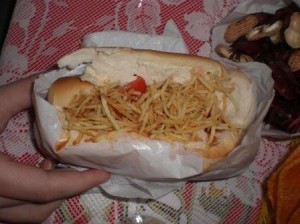
We had hotdogs (cachorro quente) which around here means tomatoes and onions cooked down into a thick stew and sliced hotdogs mixed in. Another option you can find is the whole hotdog with this stew on top. It is then served on a bun (much bigger and sweeter than buns in the US) and topped with batata palha, or matchstick potatoes, as we used to call them. Not exactly health on a bun, but there were some veggies in there somewhere.

Here are a few great recipes, ideas and reads from the week.

Kahakai Kitchen featured a recipe for Thai-Flavored Ratatouille. Tasty veggies in a sauce made with almond butter! You know I love peanut sauces and I’m excited to branch out to almond butter sauces as well.

Meringue Bake Shop celebrates the 4th with the cutest cupcake creation ever – Cupcake Kabobs! What a creative idea!

A new position stand on the health benefits of a vegetarian diet was released by the American Dietetic Association this week. I found the recap interesting because it seems they’ve taken a closer look at the details of this type of diet. I’m looking forward to reading the entire position stand.

I think most of us would agree that we already knew vegetarian diets can be healthy, but I appreciated the fact that they emphasized the term well-planned. I met way too many girls in high school and college who would eat boxed macaroni and cheese while the rest of us ate meat and made it a point to announce themselves as a vegetarian.

In my opinion, just because it is vegetarian doesn’t mean it is healthy. Similarly just because it has meat doesn’t mean it is unhealthy. Both eating lifestyles can promote health and wellness if food source, nutrients and portions are taken into consideration.

Tropical Wheat Berry Salad

July 1, 2009

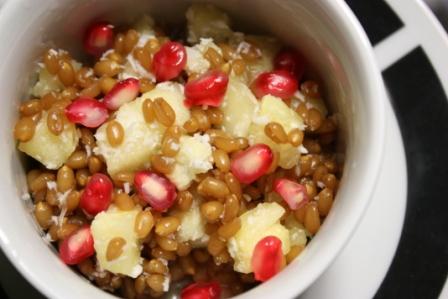
I’m still on a bit of a wheat berry kick. I brought some back with me when I returned to Brazil and lately I’ve been thinking about what I could do with them. After picking up a pineapple and then splurging on a pomegranate at the market the other day, I finally had my answer.
I wanted something sweet, not savory, for this experiment and I thought I could pull it off with a wheat berry fruit salad using tropical flavors.
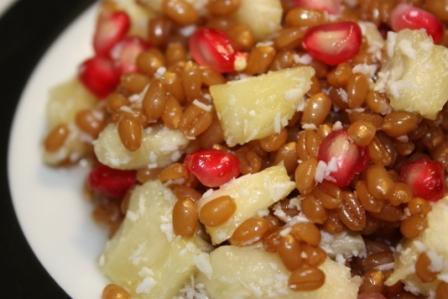
I simply combined honey, lime and coconut for a dressing. Tossed some diced pineapple with cooked and cooled wheat berries. Pomegranate arils came about for color.
I really enjoyed this sweet twist on a healthy grain. It’s great for a cool, but hearty breakfast on a hot morning or maybe a new salad to take to a picnic.
Tropical Wheat Berry Salad
½ cup dry wheat berries
1 ¾ cup water
1/3 cup pineapple, finely chopped
2 tbsp honey
Juice of two limes
2 tbsp finely ground coconut
¼ cup pomegranate arils
I cooked the wheat berries according to package directions which was ½ cup in 1 ¾ cup of water. Bring to a boil, reduce heat and simmer, covered, for about an hour until tender. Drain them if necessary and let them cool.
Once cool, toss the pineapple with the wheat berries. Whisk together the honey and lime juice. Taste to determine if you need more sweet or sour depending on your preferences. Whisk in the coconut.
Pour dressing over the wheat berries and toss to coat. Garnish with the pomegranate.

Want to create beautiful food and product photos that you can't wait to share?!
Discover your style, control the light, and shoot using the tool you know how to use (yes, your phone included). Learn about free resources, Live Q&As with Lori, and online courses you can take from anywhere in the world!
We respect your privacy. Unsubscribe at any time.