Cookbooks. I love everything about them – the valuable information, the creativity, delicious recipes, beautiful photos and stories about the hard work that went into producing them.
There is nothing better than cookbooks that cover my favorite
topics and Liana Krissoff has managed to write two that fall into that category
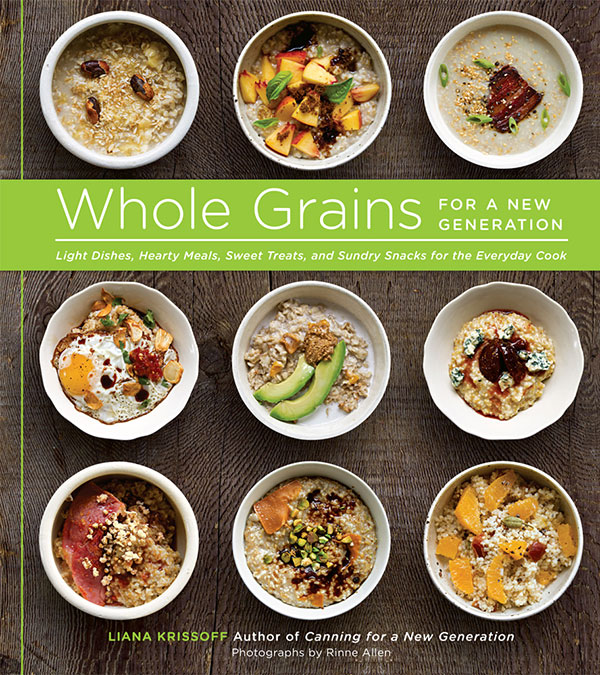
– Canning for a New Generation, and now, Whole Grains for a New Generation.
I received a copy of the latter just a few weeks ago, and as with
most cookbooks I love, I read every recipe before I could put it down. Liana covers whole grains with every bit of
the creativity and thoroughness that she covered food preservation. My favorite
part is the section on steel cut oatmeal options. Internationally inspired
ideas include avocado and oranges, goat cheese and honey and blue cheese with
soy sauce.
But don’t think for a minute that this book is all oatmeal. I consider
myself pretty well versed in whole grains, but this book took them to a new
level for me with recipes such as Curried Cauliflower and Sorghum, Millet Maki
Rolls with Avocado Puree and Chickpea-Flour Crepes with Quinoa, Melted peppers
and Goat Cheese. The book is filled with gluten-free, vegetarian and meat and
fish dishes.
I was excited to learn that Liana was open to email interviews, so
I decided to ask her a few questions that came to mind as I browsed her work.
Here are a few things she had to say. If you are as big of a cookbook and whole
grains fan as I am, I think you will find them inspiring! And she also provides
some great tips. See the note about prepping steel cut oats!
Me: Working in public health I
find it difficult to convince people to eat whole grains, let alone cook them.
What are some tips you would give a person just beginning to cook or bake with
whole versus refined grains?
Liana: I think
the key is to enjoy whole grains for what they are rather than expecting them
to be something they're not. I'll be the first to admit that it's not easy to
become acclimated to most whole-wheat pasta or switch to multigrain baguettes
after years of enjoying the traditional refined-wheat-flour versions. Pasta is
delicious! Bread made with white flour can be truly amazing stuff! But instead
of making those the basis of your meals every day, I'd suggest just skipping
the pasta and white bread and making something different altogether: try a
polenta tart with chard and Gruyère, for example, instead of pasta; serve your
wine and cheese with a crisp seeded rye flatbread instead of white French
bread.
I understand that in a lot of cases
this does mean spending a bit more time in the kitchen, so I've really made an
effort to simplify the recipes and pare down the processes in this book—a
polenta tart isn't the no-brainer that a big bowl of pasta with tomato sauce
is, but it's in the ballpark, totally doable.
Another thing I'd recommend is
starting with whole grains that are especially easy to cook and easy to love:
quinoa, for example. Fifteen minutes on the stovetop, and it's so incredibly
versatile: it goes with just about anything—summer or winter vegetables, meat,
fish, fruit, sweets—and can act as the grain or starch in just about any meal.
It also makes a great quick dessert pudding.
Or just focus on one meal of the day
and replace your dry sweetened prepared breakfast cereal with steel-cut oats:
In the evening, bring the oats and water to a boil, remove from the heat, and
let stand overnight; the next morning, just warm it up and it's ready. Try
savory toppings on your oatmeal if you're the adventurous type. Instead of
store-bought snack crackers or cookies in the afternoon, pop some popcorn on
the stovetop and experiment with unusual toppings—there are tons of suggestions
in the book.
Me: Travel and food culture inspire my own blog
so I love the international influences in your recipes. Where do you get your
inspiration for these dishes?
Liana: I'm
glad to know that's a selling point for cookbooks these days! A lot of my
cooking is influenced simply by what I find in the stores and markets around me
at any given time of year, or wherever I'm living at the time. I'm cheap, so I
use whatever is most plentiful and readily available, and sometimes that means
coming up with a dozen ways to use plums or whatever because they're in season
and the ones on sale happen to be really good.
I go to a lot of restaurants—not so
many high-end places, but taco shops and pho restaurants, random Middle Eastern
and African places in strip shopping centers, and German bakeries on Main
Streets in the Midwest. Just becoming familiar with the wide variety of cooking
techniques used around the world—by eating in restaurants (and maybe peeking
into the kitchens), by reading books, by traveling—can open your mind to new
ways of doing things. For example, the Indian technique of tempering, or frying
whole spices in ghee or oil and adding the sizzling mixture to a dish at the
end of cooking: It works so well to infuse the food with a bright but deep
flavor, can't this be applied to dishes that aren't necessarily traditionally
Indian? Would it work with a Texas-style chili? Can't hurt to try it, right?
My friends have been incredibly
valuable as resources too: Their creativity and willingness to try
anything are constantly inspiring. I love getting that email from a friend
who's just made the best vegetarian tom yum, or the best oatmeal cookie and has
to share the recipe. My parents, too, of course, are always experimenting with
new foods and have many times pointed me in a direction I wouldn't have thought
to go in otherwise. I often feel like I'm just taking in raw information,
massaging it a little, interpreting it, and sending it back out.
Me: If I've counted correctly, this is your fourth
cookbook. What were your experiences with the process of writing a cookbook?
Were there any major lessons learned from the first that made the ones to come
easier to write and publish?
Liana: Yes,
this is the fourth. The first two were work-for-hire jobs, which meant that the
publisher needed books written about those particular subjects, and I was given
the job of writing basically to certain specifications—although it still
surprises me how much leeway I was given to come up with my own selection of
recipes and to write what became quite personal books. I occasionally wonder
how they let some of those headnotes fly!
The canning and whole grains books
were more traditional arrangements, which just meant that after they were done
I felt more like an "author" than a "writer." I wish I
could say that writing has gotten much easier for me, but each book has been
hard in its own way. The first two because the schedule was crazy and I had to
make so many slow cookers' worth of food in a short period of time in a very
small apartment. The canning book because I was essentially canning something
nearly every day for almost a year. The whole grains book because I felt like I
was learning about whole grains as I worked: a lot of those grains were new to
me, and the experimentation phase was pretty intense. The book I'm working on
now, a vegetarian cookbook, has been challenging simply because of the sheer
scale of the project: How do I narrow my focus?
To answer your question in a more
fine-grained way, from book to book I have gotten better about methodology: my
system for developing and testing recipes, and keeping track of what I'm doing
and what I've done, has become more refined, so not as much energy is wasted on
procedural issues. I don't repeat my mistakes because I've misplaced a page of
notes or forgotten how long I cooked something. And some idiosyncrasies I've
just learned to deal with: I thought for this current book I'd try to write the
headnotes for the recipes as I was writing the recipes themselves, so I
wouldn't be scrambling to write them at the end, but I'm realizing that this
just doesn't seem to work for me.
Writing clear recipes and writing fun
and helpful headnotes are two different skills. One is the kind of thing I'd
prefer to write standing up at the kitchen counter with my notes and timers
around me, or at the very least at a desk; the other needs to be written cozied
up in a soft chair with a glass of wine or cup of tea nearby, late at night
with a deadline looming. So I guess I'll be writing a couple hundred headnotes
right before the manuscript is due, and I've come to accept that the book will
probably be better and more interesting for it even if my hair is a few shades
grayer at the end of the day.
Me: Any tips for those out there who aspire to
write their own cookbook?
Liana: People
who know about publishing say that in a glutted cookbook market you need a
platform, a built-in audience, a blog with a ton of traffic. And that's
probably true if what you want to write is not within a small, specialized
niche. But I think that if you can find a niche and fill it very well—like
Sandor Katz has done with his fermentation bibles, or Isa Chandra Moskowitz
with her vegan cookbooks written in a certain clever style, or Samuel Thayer
with his foraging books—you can be very successful. You just have to convince a
publisher that people want to read a book about that topic even though there
aren't already a lot of books in the market segment yet.
Publishers tend to be pretty
conservative, and want to go with what they know will sell, especially with
cookbooks, which are very expensive to produce, but I would like to believe
that when presented with solid market research they'll take a chance on
something different. I wrote a canning book because there weren't very many out
there yet; there wasn't even a canning section on the bookstore shelves, and I
didn't know where bookstores would even place it, but I knew there was
this latent desire for more canning books out there and was lucky to find an
editor and publisher who were eager to take the plunge.
Think about what's missing from your
bookstore shelves. What do you want to read? That may be what you should
write! I'd also suggest you read, read, read. Blogs are great, but read
actual published cookbooks, too, so you know how to write a recipe clearly and
make your language consistent. This is the editor in me talking, of course:
Clarity! Consistency! But I'm convinced that if your mechanics are sound, your
personal voice comes through more effectively and the whole pitch becomes more
persuasive.
*********************************************************************
Such great answers to my questions.
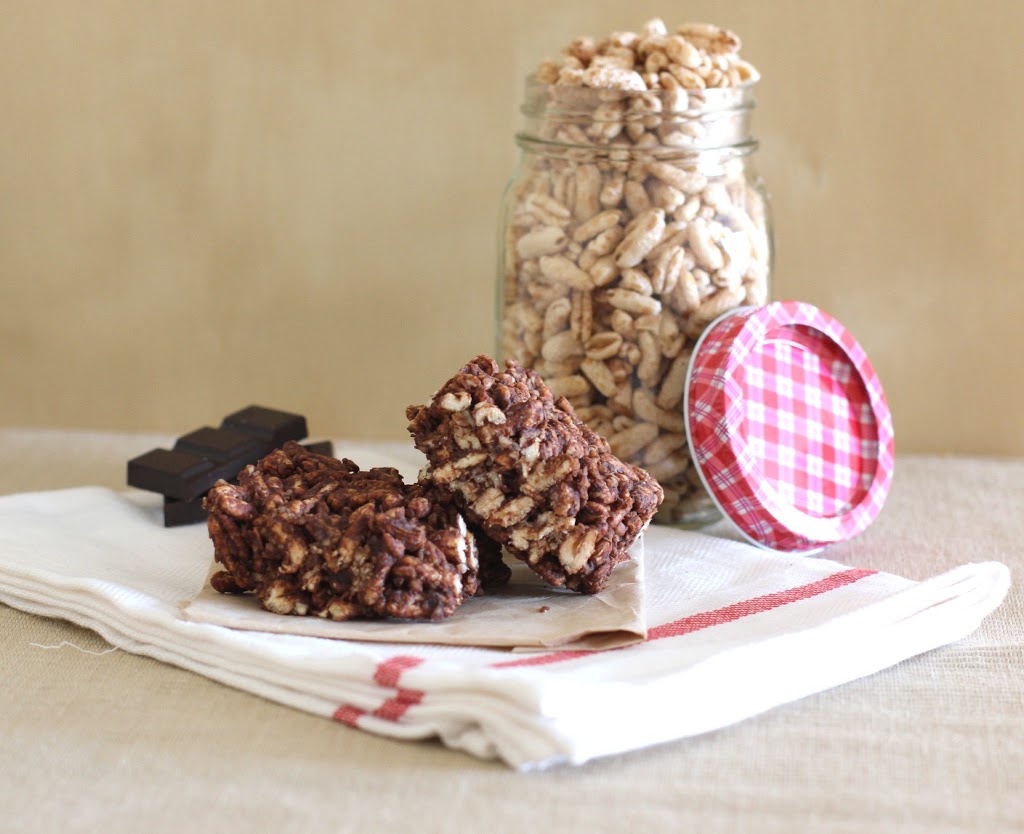
I’ve tried for a while to come up with a good krispie treat-like
recreation using puffed kamut and rice without much luck. I was thrilled when I
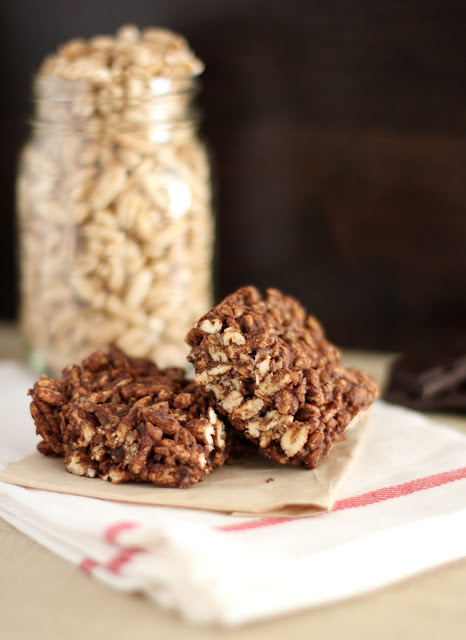
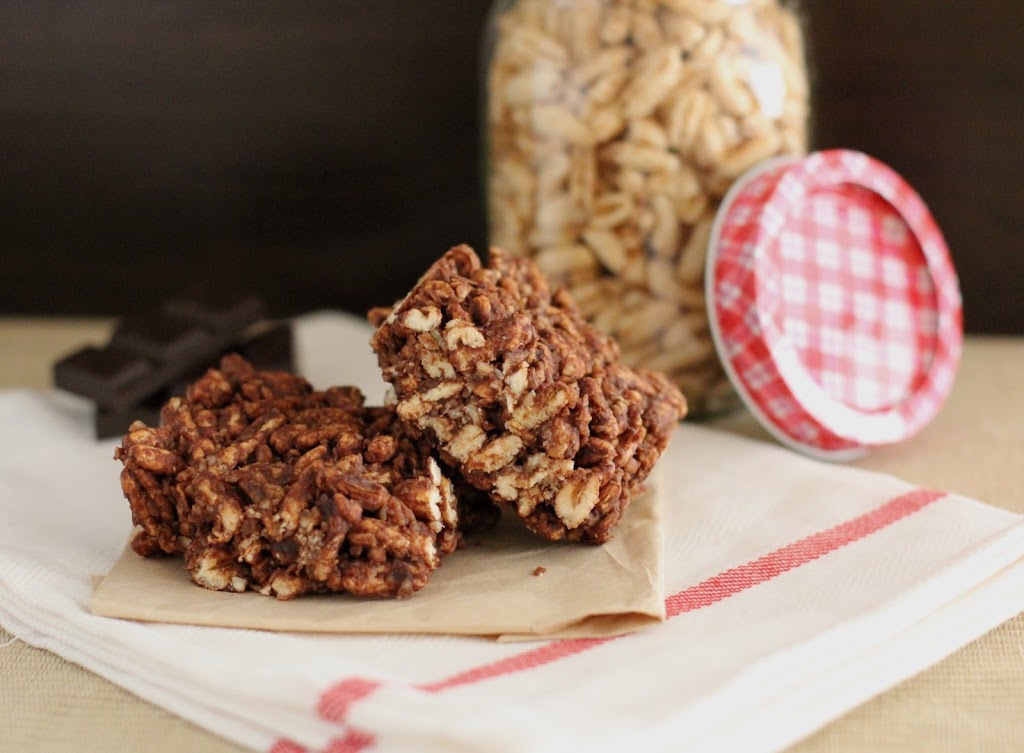
saw the Chewy Chocolate-Tahini Puffed-Grain
Squares in this book, and I knew right away it was what I wanted to make.
These are so quick and tasty. I kept mine stored in the fridge and
cut them with a serrated knife after they got firm. I love these as a fast
breakfast on a busy morning or as a post-run snack.
Chewy Chocolate-Tahini Puffed-Grain Squares
Reprinted with permission from Abrams Books
Makes 16 |
vegetarian
From the book:
These chewy,
dense squares were inspired by a recipe in Terry Walters’s brilliant book Clean
Food. There’s very little in here that isn’t good for you, and yet my
daughter—who is certainly no stranger to real sweets—absolutely loves them. Parents
in particular should appreciate the value of a treat-snack you don’t really have
to think twice about allowing.
These keep nicely
for up to two weeks in the refrigerator. If you want to keep it gluten free,
use puffed brown rice or millet or a combination of the two. You might also
consider substituting sunflower seeds for the almonds (allergenic to many kids)
if you plan to pack one of these into a kid’s school lunchbox or send them to
school as a treat for the class.
1 cup (110
g) whole almonds
4 cups (60 g) unsweetened puffed Kamut, brown
rice, spelt, or millet, or a combination
2
tablespoons shredded unsweetened coconut (optional)
1
tablespoon flax seeds, coarsely ground
3
tablespoons olive or vegetable oil
1/2
cup (120 ml) honey or maple syrup
2
ounces (55 g) bittersweet chocolate, chopped
2
tablespoons tahini
Pinch of salt
In
a food processor or blender, pulse the almonds until finely ground. Dump into a
large bowl and add the puffed grains, coconut, if using, and flax seeds.
In
a small heavy saucepan, combine the oil, honey, chocolate, tahini, and salt.
Cook over medium heat just until the chocolate is melted and the mixture is
semi-uniform. Pour over the mixture in the bowl and stir with a rubber spatula
until well coated. Dump the mixture into a 9-inch (23-cm) square baking pan or
dish and press firmly with your palms or the spatula to an even layer. Use a
bench knife or metal spatula to cut into 16 squares, then cover and put in the
refrigerator until firm, about 15 minutes. Transfer to an airtight container
and store in the refrigerator for up to 2 weeks.


4 comments:
My grandma used to make puffed wheat squares, and I loved them as a kid. I have never made my own, even though I know they are relatively easy to make. This version looks great - hopefully I can get around to trying them out soon :D
I love cookbooks about whole grains because I can never get enough of them!! This sounds particularly awesome. Puffed kamut...now THAT I have never had before! Definitely need to try these out!
Wow, this cookbook seems like it's right up my alley! I like what she has to say about switching from white pasta and bread to whole grains - do something different rather than trying to swap in a whole grain version. Like you, I have trouble trying to convince people to switch to whole grain versions of things they're used to eating, but this approach may have more success. Thanks for posting about this book - it's now on my wish list - and the recipe. Have it pinned to try!
I'm always interested in learning new ways to cook and create dishes with whole grains. And, I love this take on a rice crispy treat. With coconut, chocolate, and tahini, they sound delicious!
Post a Comment