Don’t you just hate it when you think you have things all figured out only to learn you were wrong. Much to my disappointment that is how I felt last week. It all started when I came across the wonderfully informative post about types of sugar by Oyster Food and Culture.
When we first moved to Brazil my sugar quest began. I hadn’t really intended to reduce or cut out white and brown processed sugar until I started to learn about the açúcar mascavo (which all online sources tell me is the same as muscovado) available there. Considering this comes from evaporated sugarcane juice my research lead me to assume that it was a better choice than our standard, nutrient stripped white and brown sugars widely used in the US.
When we got back to the US, I was horrified at the price of a tiny little box of it considering what I had paid in Brazil. I then turned to demerara sugar learning that it was a more natural form from evaporated sugarcane juice as well.
Knowing that raw sugar isn’t much better than refined white sugar nutritionally, when I came across that post last week I was a bit shocked to find that both muscovado (mascavo) and demerara were listed under raw sugars.
I’ve conversed a bit with LouAnn (Oyster Food and Culture author) about this and she double checked her sources and let me know that they indicate that those two sugars undergo heating before evaporation which classifies them as refined. I double checked my sources and this is what I’ve come up with.
First, let me address demerara because I’m less clear about how beneficial it may be. So far I haven’t found a detailed nutrient outline, but I now know that this sugar is heated and then evaporated which can classify it as being refined and processed. Read on though, because you may be surprised by what I found out about two other popular so-called unrefined sugars.
Okay, so on to the mascavo sugar.
After reading that post last week I just wasn’t ready to give up on it so easily. Perhaps it is a fondness of discovering it while living in Brazil and that connection to culture. However I was still determined to confirm it a better choice than refined white and brown sugars, including raw sugars.
So far every website which sells it has stated that it is unrefined, simply evaporated cane juice. Another site which doesn’t have references (grrr!) stated that it is slightly refined.
Still, I remained hopeful in my search when I came across the Diabetes Society of Brazil which states that mascavo does contain the vitamins and minerals associated with sugarcane which is the important part for me.
In the post I mentioned earlier, another sugar that claims to be unrefined is rapadura. What’s interesting is that it is produced in Brazil, but I never came across it in the supermarkets we frequented. However, my husband seems to remember trying it from the local feira and seeing it at roadside stands.
After being thoroughly confused something dawned on me that I’m a bit embarrassed to admit I let slip by. My husband worked closely with the sugarcane industry when we were living there and many of his coworkers were very familiar with the processes. So, I did some asking and this is what I found out.
First of all, both mascavo AND rapadura are heated. They are just heated for differing amount of times. The rapadura is boiled and concentrated into block form. In the words of my Brazilian source it is the most basic/natural type of sugar between the two. The process maintains mineral and a small amount of vitamin content.
Mascavo is taken just past boiling and is transferred to a crystallizer for cooling and evaporation. The good news is while it isn’t as superior nutritionally as rapadura the process does maintain some vitamin and mineral content and it is superior nutritionally to refined white sugar.
My source was kind enough to show me this chart from the Ministry of Agriculture in Brazil listing nutrient content of three sugars – white refined, mascavo and rapadura. Don’t be overwhelmed by the Portuguese. Most nutrients are similar in both languages just keep in mind that “a” in Portuguese is “to” in English and a comma is used where we would use a period. For example “1,5 a 7” is “1.5 to 7”.
You can see when you check out the chart that nutrients are most plentiful in rapadura, but that mascavo still has some healthy components left in it versus refined white sugar. What I haven’t confirmed yet is whether or not mascavo is, in fact, muscovado. I think it is, but I can’t confirm because our friend in Brazil had never heard the term muscovado. I’m still pretty certain that it is just a difference in languages though.
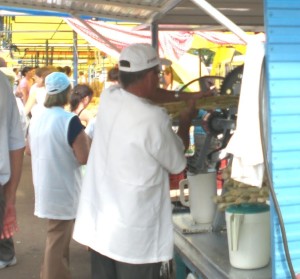
So the truth is that if heating is part of the refining process than even rapadura can’t exactly be considered unrefined even though it may be the best choice nutritionally. I also learned that the reason I didn’t see it in Brazil is that it isn’t common for cooking due to it’s block form, although I know a lot of real-food focused food bloggers do use it. Mascavo is more ideal for cooking at least it seems that way in Brazil. Regarding the refining process really the only unrefined form of sugarcane available is the juice like what is being pressed in the photo below, called caldo de cana in Portuguese.
Okay, I’m not sure how much you all have cared about this, but I must admit I feel a lot better. I’ m not sure that I will keep using demerara, but I still plan to check out rapadura and I’m happy with my choice of mascavo when I can get it.
Anyone else find it odd that the less processing the more expensive the sugar? Seems like it should be the other way around to me.
I’ll close by saying that sugar is sugar when it comes to calories and cavities. I just want a product that is less refined with more nutritional value when I do use it. I trust more natural sweeteners such as maple syrup and honey, but I also like to bake and sometimes a sugar product is necessary. That’s really why I felt the need to find out some answers for myself.
References mentioned in this article:
Ministry of Agriculture Brazil – Rapadura
Diabetes Society of Brazil – Mascavo Sugar
Ministry of Agriculture Brazil – Rapadura
Diabetes Society of Brazil – Mascavo Sugar
This post has been submitted as part of Food Renegade’s Fight Back Friday.
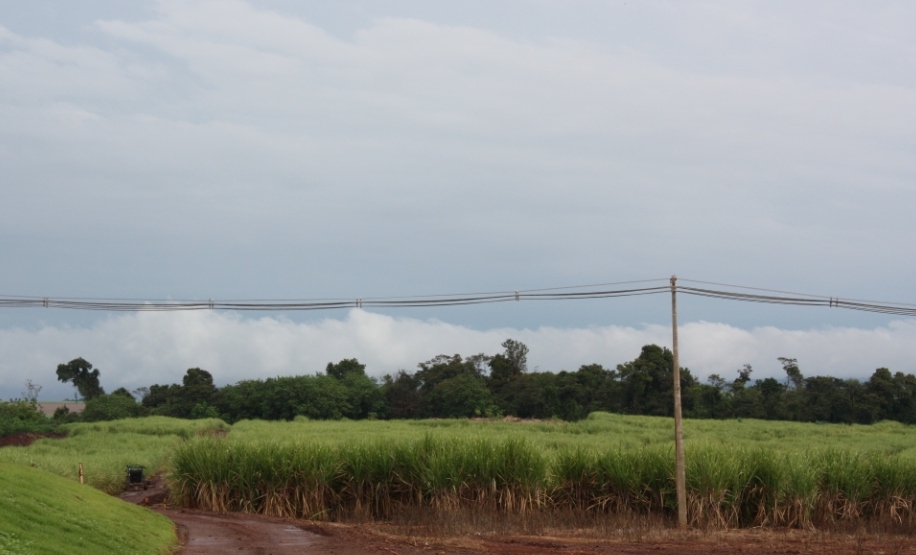
First photo of sugarcane fields in southern Brazil.


Funny Matt & I were talking about this the other day too because I was wondering if it was any better to eat raw or brown sugars than white so this was really interesting to me
Awesome info Lori! Sugar is a battle for me because I’m trying to find the best I can to use. Right now it’s organic cane sugar which while still processed at least seems much better than regular white sugar. I like the taste a lot better too!
The price I’m sure is marketing, the more “special” it is, the more it’s going to cost even though the work is less. Hooray for capitalism! 😉
I AGREE.
A cup of sugar in a recipe is still a freakin’ cup of sugar, regardless of if it’s white sugar or if it’s turbinido etc.
I still choose things like honey, agave, or so-called “raw” sugar over regular white sugar, but if I’m adding sugar to a recipe, it’s a SPECIAL OCCASION recipe, and I only use a very small amount at a time (I prefer sweetening my recipes with pureed fruit instead).
Thank you SO MUCH for sharing what you’ve learned!
Lori, this is a very interesting post. I’ve not thought too much about the sugar I use, I just don’t use too much of it. That it is expensive makes all the more special, and something that I’m likely to reserve for a special occasion.
Very interesting Lori, I never heard about demerara, and rapadura I didn’t like the taste.
An interesting post, Thankyou! I am currently reading a history of food with a great chapter on sugar. I love the complex flavours of less refined sugar.
This is great info., thanks so much for sharing this!
Great info. Thanks for sharing! My dad is going to Brazil today, I am jealous.
Great follow up, I have to say after exchanging emails with you it was a bit like going down the rabbit hole in Alice and Wonderland – so many web sources seemed contradictory. There also, as was admitted more than once a pretty gapping definition of refined. When I did the post, I confess I focused more on identifying the different types of sugar rather than the nutritional aspect as I never considered it a source myself, especially after reading how some sugars were refined and then “painted” with molasses to make them brown. thanks for going the extra mile, and if you do not object, I’d love to link back (close the loop by the looks of it, to this post, so people can get a more complete picture)
kat – Yes, it is an interesting and often confusing topic. I’m still learning a lot.
Andrea – Thanks. Yeah, it seems that way with a lot of natural foods. High demand and superior nutrition means they try to charge more. Boo!
Sagan- Good idea with the pureed fruit. I’ve done that some with bananas. My main goal is to have some of the vitamin and mineral content still in the sugar mainly because I do view sugar as a natural product from the earth. Those are the kinds of foods I want in my diet.
FLandB – Yeah, I’ve been trying to cut back as well, especially in things like my coffee. I’m actually liking how all of these lesser processed sugars taste in my baking.
Anna – My husband says he remembers us trying it in Brazil, but I can’t remember for the life of me. He tells me we didn’t like rapadura either. 🙂
Joy – I agree, I like the complex flavor as well. It seems almost sweeter to me.
janet – Thanks! You’re welcome.
Maria – Bummer that you didn’t get to go! Will he bring you some things back? Let me know if you want some recommendations. 🙂
OysterCulture – Oh yes, your post was approached from the information side regarding types of sugar and very well done! This is what happens when it goes into the brain of someone who reads always focused on the nutrition side. Ha, ha! Often my downfall. 🙂 The contradicting info is maddening at times. No problem at all with a link.
Very interesting research! I’m also in a process to find my ideal sugar to use. I have been using a lot of agave lately.
Very interesting! So…when you use these raw sugars in your cooking, is it a 1 to 1 substitution?
great post as usual lori! very informative. thank you for gathering all these learnings from you! thanks for sharing!
Wow, thank you so much for all this great research! Here in the U.S. almost half of the sugar on grocery store shelves is from genetically-modified sugar, which with our food allergies is a big no-no. Until labelling laws are put in place, organic is my only choice. I try to find the least processed organic product I can find, and regulate the use of it tightly!
Now I’m quite curious about rapadura but I’ve become a fan of muscovado! We brought some back from the Philippines, whose sugarcane production is only slightly behind the US’ output. Muscovado is more common than white sugar there and I do enjoy that distinct molasses flavor.
At this point, I’m just focused on trying to cut down my sugar intake, regardless of type! I’m such a sweet tooth . . .
cathy – I use a 1 to 1 substitution with the sugars. Sometimes when I’ve used demerara I’ve added some maple syrup or honey for if the batter or dough seems too dry.
I’ve searched for hours and hours to find a reputable source listing nutrition data for rapadura. There are conflicting claims. But the Ministry of Brazil seems to be a very credible source… and I so appreciate all you had to say about it. THANK YOU!!!!!!!!!
Amy
Hi Amy – So glad I could help. It is certainly tough to find. My living in Brazil definitely leads to informational perks when it comes to sugar. Ha, ha!
Hi Lori! I’m from southern Brazil (Porto Alegre). I was trying to find out how is the English word for “açúcar mascavo” when I came across your post – very interesting!
My family is from the countryside, so generally we buy rapadura (or melado, as we call here) from local farmers and prepare at home with peanuts (homemade pé-de-moleque). That’s the only way I consume it. We used açúcar mascavo and stevia, and recently we adopted demerara (all my mum’s choices).
Hope you had enjoyed your stay in Brazil!
Hi Melissa!
We had a wonderful time in Brazil! And oh how I miss pé-de-moleque! I learned a lot about sugar when we were there. My husband’s coworkers still bring me açúcar mascavo so I’ve been well stocked. You can get it in the States, but it is very expensive for a small amount so I am very lucky to have people bringing it to me!
Thanks so much for your comment.
Part 1)
Hello, I loved your post, I was searching every where to find the nutritional content of rapadura (aka Panela, jaggery, or gur)and was pleased with the link you provided.
Although I thoroughly enjoyed your post, I’d like to address your statement “sugar is sugar when it comes to cavities”.
Part 2)
The issue of sugar and cavities is not as simple as it would appear and I would like to shed some light on the topic for all of us sugar addicts out there.
First, I’d like to clarify the connection between sugar and cavities. There are wo ways sugar can contribute to cavities; through digestion and from direct contact with the surface of the tooth. When it comes to direct contact, sugar (any form) only serves to encourage existing
cavities by feeding the residing bacteria but doesn’t seem to actually create new cavities. This would suggest that the contact of sugar and the tooth is not the source of the problem. The digestion of sugar however is a very different story. This is where it begins to make a huge difference of which sugar you choose to use.
“…the minerals needed to digest sugar are calcium, phosphorus, chromium, magnesium, cobalt, copper, zinc and manganese.” “…in order to properly digest sugar, it (your body) needs these minerals and the corresponding enzymes. When these are not eaten along with the sugar, the body tries to adapt by pulling stored nutrients from its own bones and tissues.”
Link (Whats so bad about flour and sugar)
http://www.processedfreeamerica.org/resources/health-news/48-whats-so-bad-about-flour-and-sugar
This means that consuming sugar that has been striped of its minerals (white sugar) is not equal when it comes to bone/dental health as other sugars that include minerals (sugarcane juice). To eat sugar without minerals will cause the body to leech minerals from your bones which in theory can then promote tooth decay, osteoporosis and other degenerative diseases.
As Dr. Weston Price concluded: “a foods micronutrient content is the primary determinent of its effect on dental health.”
A diet with high calcifying qualities (calcium, phosphorus, vit d, etc.) will prevent cavities and can even reverse tooth decay!
Link (Reversing tooth decay) http://wholehealthsource.blogspot.com/2009/03/reversing-tooth-decay.html?m=1
If anyone wants to avoid cavities, then their main concern and threat would actually be grains. Grains are the leading contributor to tooth decay. The main reason why we get cavities is due to a deficit of minerals that your teeth require. Grains contain phytic acid that inhibit
those minerals from being absorbed. So, when you have a whole society that eats mostly grains, you end up with a whole society suffering with cavities and a society with very well paid
dentists. Unfortunately, to convince an american to give up bread, pasta, pastries, cakes,
cereals, rice, corn and other grain food, is almost impossible.
“…refined wheat is worse than refined corn and worse than refined sugar. This is really
at odds with conventional wisdom.” “…I suspect this has to do with the phytic acid content of the grains, which binds to the minerals and makes them partially unavailable to diffusion into the teeth. Cane juice contains minerals but no phytic acid, so it may have a higher mineral availability.”
Link (Unrefined vs refined carbohydrates and sugar)
http://wholehealthsource.blogspot.com/2009/07/unrefined-vs-refined-carbohydrates-and.html?m=1
Based on all of this, I believe that sugarcane not only poses no threat to teeth but can actually be good for them considering that sugarcane has an abundant source of minerals.
I’d also like to add another link to an interesting study done in India on the differnces in tooth decay between children living in areas that grew sugarcane vs those who did not. In their study, they concluded that the children who lived by sugarcane crops (ate them often due to availability) where 49% less likely to have cavities.
Link (study of cariogenicity of raw sugarcane in 12 year old children)
http://www.panelamonitor.org/documents/653/study-cariogenicity-raw-sugarcane-12-year-old-chil/
Well, I guess I’m just ranting now but I felt the need to share this info.
Muscovado Sugar is known also as Barbados Sugar. It is heated to concentrate, but suffers no chemical refining to whiten it, like other sugars. As a result, Muscovado Sugar can have up to 15% of organic nutrients and vitamins and the 85% rest is sucrose. Chemically refined sugar (white sugar), is 99% sucrose. Now some math: the FDA tells us that Americans consume around 56 pounds of sugar per year. If we make an effort to consume Muscovado Sugar instead of the chemically refined white sugar, we would consume 8.4 pounds of organic nutrients and vitamins and 47.6 pounds of sucrose. That is much better than consuming 56 pounds of sucrose, with the white chemically refined sugar. However, there is still sucrose and much of it, even with the Muscovado sugar.
Forgot to say: we find many brands selling Demerara Sugar as if it were raw sugar or Muscovado Sugar. This is not the case. Demerara Sugar is a cheaper chemically refined whitened sugar to which are added molasses “after” refining. The added molasses coat (paint) the white sugar crystals into brown. By selling this “painted” sugar as being raw or Muscovado Sugar, they can charge a higher price from uninformed consumers.
–
Us consumers can be fooled: we think that the darker the sugar, the more natural, raw, it is. Not true. Muscovado sugar usually tends to be caramel colour, it can be lighter than the chemically refined Demerara Sugar. By adding more molasses to the Demerara refined sugar, it can turn very dark brown. But it is not raw, nor is the real (and expensive) Muscovado. Demerara has much more sucrose and less sugar cane fibers and vitamins per kilo than the real Muscovado Sugar. Here is a picture of the real Muscovado Sugar, check the consistency: http://images.cbnewsplus.com/moveimages/wp-content/uploads/2013/02/acucar-mascavo-%C3%A8-mesmo-mais-saudavel.jpg it is hard to see the sucrose crystals in it.
Now check the Demerara Sugar in several grades of colour, you can clearly see the sucrose crystals in it. It looks very different from the real Muscovado Sugar http://www.thelonebaker.com/storage/brownsugar.jpg?__SQUARESPACE_CACHEVERSION=1272957721729
Also, Muscovado Sugar has a very distinct aroma, close to sugar cane juice. Demerara has a totally different aroma from Muscovado, if any aroma at all. This happens because the Muscovado Sugar preserves part of the sugar cane fibres and aroma.
I know it is difficult for the average consumer to check the Muscovado aroma and taste. But once you have checked it only one time, you will never forget and you will never again be fooled.
—
Hope to have helped.