Last week I set out to plan a meal I could put together for Sunday that would serve as somewhat of a St. Patrick’s Day celebration. The holiday is non-existent around here (along with Valentine’s Day) which has always confused me due to the fact that I’m living in such a Catholic country.
Anyway, I tossed around ideas for a while considering what my ingredient restrictions would be. Then a recipe came to mind. On my ex-pat blog a long while back someone mentioned that I should try Escondidinho. This was followed by a comment from another ex-pat saying that it was like a Brazilian Shepherd’s Pie.
I had forgotten about this recipe and a couple months ago my husband took me to a new restaurant in town that he had been to previously. He said there was something on the menu he wanted to try. After ordering it, eating it and feeling that the name of the dish sounded oddly familiar I went back in my bookmarks and sure enough, it had been Escondidinho. My commenters were right, it was very similar to a Shepherd’s pie type of dish.
So keeping with the spirit of the holiday and representing the fact that I do currently live in Brazil, I decided this would be our main course. With a little research I learned that as with most popular dishes there are a variety of ways of preparing it. Many recipes exist, each with their own little twist.
The one we had at the restaurant that night was made with carne seca and topped with mashed mandioca mixed with a creamy cheese here called catipury. It was delicious. However, the recipe I had was for Escondidinho de Frango (chicken). I decided to go with this one because we had already had some ground beef throughout the week and I didn’t want more red meat.
I’ve learned it is difficult to translate recipes from another language. Some things I followed exactly and others I improvised from the original recipe, slightly guessing what the translation meant.
A few notes about ingredients. This recipe, of course, called for mandioca (manioc, yucca), considering it is likely you don’t have access to this, potatoes or another root vegetable would work well. The recipe also calls for creme de leite. This is an ingredient that doesn’t exactly match anything available in the US. A Brazilain friend once told me it was “like sour cream without the sour”. The best substitute would be heavy cream or half and half, although the viscosity isn’t exactly the same. That’s about it. Everything else should be easy to find in most places.
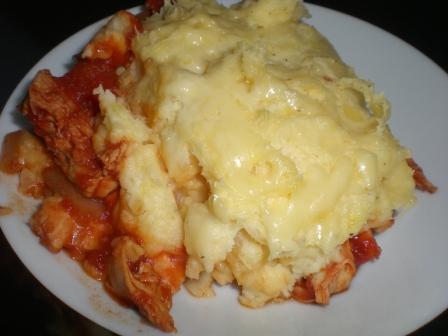
Escondidinho de Frango
Translated and adapted from Mais Você Culinária at globo.com
Olive oil 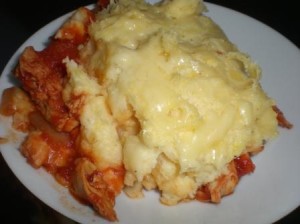
1 onion, minced
2 garlic cloves, minced
5 tomatoes without skin (I used canned, similar to whole tomatoes)
1 small can tomato sauce
1 kg (2.2 lbs) of chicken breast, cooked and shredded 2 Tbsp soy sauce
1 kg (2.2 lbs) mandioca, cooked (substitute potatoes) 2 Tbsp butter
1 can cream of milk (1/2 cup heavy cream)
1/3 cup coconut milk
½ cup grated parmesan cheese
Pepper, ground nutmeg, parsley, chives and crushed red pepper all to taste
½ cup grated mozzarella
In a medium pan cook garlic and onion in olive oil until tender. Add the tomatoes, tomato sauce, chicken breast and soy sauce. Heat through, stirring to break up tomatoes. Set aside.
In a bowl, use a potato ricer to mash potatoes or use a mixer, add butter.
In a mixer beat cream milk, coconut milk, parmesan cheese, pepper, ground nutmeg, parsley and minced chives and red pepper. Add the cream to your mashed potatoes and mix well.
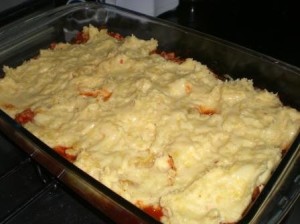
Grease a large glass baking dish. Pour in chicken mixture. Top with potato mixture and then sprinkle with cheese. Bake or broil until cheese is melted and top is browned. Serves 6.
And what would St. Paddy’s Day be without a little Irish whiskey. So along with this…..

I also put together a cake using the star ingredient. I came across a recipe for Apple Cake in my
Joy of Cooking cookbook that was perfect to modify for making a
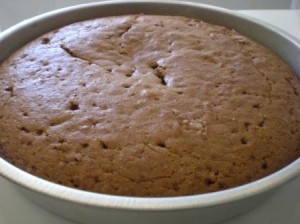
Spiked Spice Cake.
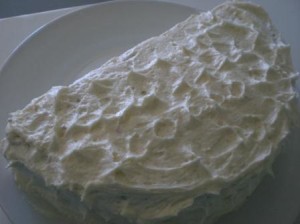
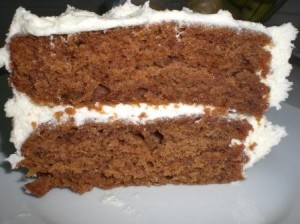
This recipe makes one 9 –inch round cake and in order to keep us from having cake around all week I just made the one layer and then cut it in half to make a half layered cake, you’ll see below. Double recipe for a full, round layered cake.
Spiked Spice Cake 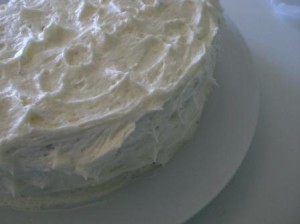
1 cup all-purpose white flour
½ cup whole wheat flour
1 cup mascavo sugar (or use brown sugar)
1 tsp baking soda
½ tsp cinnamon
1 tsp pumpkin pie spice
½ teaspoon salt
1 cup buttermilk
½ cup vegetable oil
2 Tbsp Irish whiskey
1 tsp vanilla
Sift together dry ingredients removing any lumps from the sugar. Stir in wet ingredients and mix until a smooth batter is formed. Poor into a greased and floured, 9-inch round cake pan. Bake at 350 degrees F for 25 to 30 minutes. Cool on a wire rack for 20 minutes, de-pan and cool completely.
 Frosting
3 cups powdered sugar
1/3 cup butter, softened
1 tsp vanilla
2 Tbsp Irish whiskey
Milk as needed – 1 to 2 Tbsp
Cream butter and sugar until smooth and fluffy. Add vanilla, whiskey and enough milk to create a smooth, spreadable frosting.

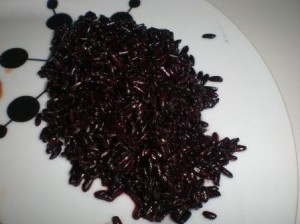
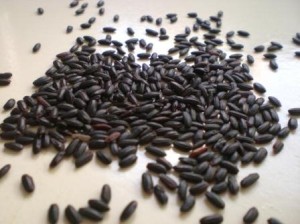
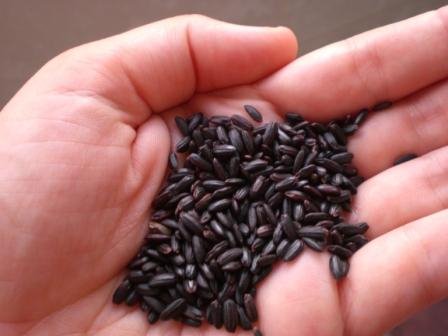 A few months ago I posted about an article regarding the attention black foods have been receiving in relation to their health benefit. Since then I kept telling myself that if I came across black rice I just had to give it a try. Lucky me, I just happened to find some at the Japanese market here in town a couple weeks ago.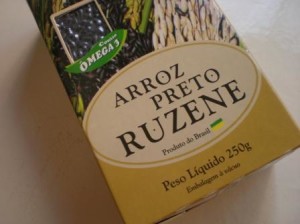

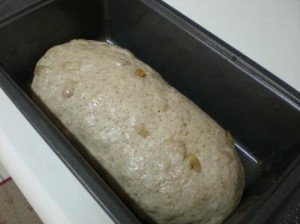
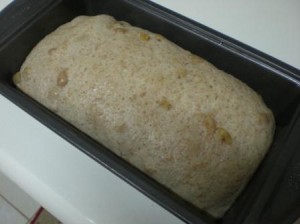
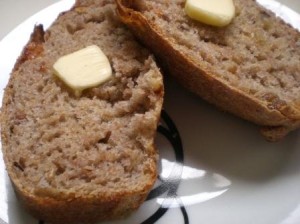
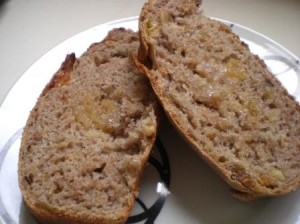 Despite my past work in bread bakeries I rarely have bread success at home. I’m not sure what it is – atmosphere, yeast, lack of talent. My mom makes amazing bread and I’ve always strived to develop a similar skill at making it.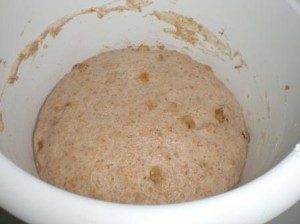

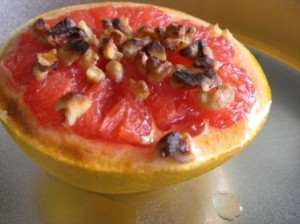 While many people begin to pucker their lips at the thought of grapefruit, I am one who is fond of this sour, citrus fruit. I can remember eating it when I was younger. Topping it with sugar or artificial sweetener was simply a part of the process. However, as an adult I’ve grown to like the tart, bitter flavor. I still like a bit of sweet with my sour, but much less than before.