Monthly Archives

January 2009

Links to a Healthy Weekend

January 31, 2009

Happy Saturday and happy last day of January! It’s been an incredibly fast month for me.
What are your healthy plans this weekend? I’m going to play some Squash with my husband today and get in a run on Sunday. Sunday night we are going to settle in to watch the big game. (The Puppy Bowl is already scheduled on TiVo) We are 4 hours ahead of the east coast right now, so it is going to be a late night.
There was so much great reading out there this weekend.
Hope you enjoy the links this week!
Feed Between the Lines had a post on Breaking Down Barriers. It is a great step by step plan to getting past those obstacles that stand between us and our health goals.
Lighter Footstep shared some information about green Super Bowl parties.
Cinnamon Spice & Everything Nice had a wonderful recipe for fruit pizza. I was especially intrigued by the addition of anise and orange peel to the crust. Yum! This looks like a tasty, and rather healthy, addition to your party spread.
Nomadic Matt’s Travel Site posted about the Secret to Long Term Traveling. Even if you don’t like to travel you have to read the 2nd to last paragraph about mini-retirements. It makes you think and is a philosophy I believe in. We shouldn’t waste our healthiest days missing out on what we enjoy.

Brazilian Moqueca

January 30, 2009

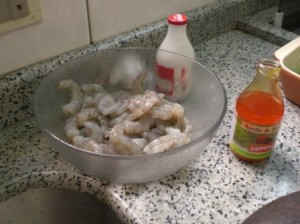
I wrote this post back in 2009 when we were still living in Southern Brazil. Our friends in Maringa invited us over to teach me how to make Brazilian Moqueca. The post recaps that experience and shares the recipe Moqueca de Camarão that I put together after this hand-on cooking lesson. 

I have a pretty exciting food journey for you today. Okay, at least it was exciting for me. 

Last weekend a friend of mine invited my husband and me over for lunch. Her husband was going to teach me how to make Moqueca! Moqueca de Camarão to be exact.

Moqueca de Camarão is a dish from Bahia in the north. It is basically a shrimp stew served over rice, often with farofa. My friends had just taken a vacation to Salvador in Bahia and were happy to show me how to make it.

This was very exciting for me for two reasons – 1) I had never had or made the dish before. 2) I found out that a fish shop here sells fresh (not frozen) shrimp. I’ve been living here 18 months and just now found that out!


We have not yet been to the north of the country, but we hear the north and south of Brazil are like two different worlds. This was my first time eating Moqueca and I loved it. It was such a nice change from the red meat overload we get here. I’m looking forward to making it myself very soon.

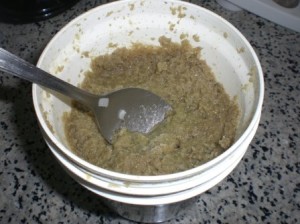
I have the recipe to share with you, but I have to warn you there is a secret ingredient that I have not found out how to make yet. We’ll call it a seasoning paste. I’m pretty sure it was a paste made from garlic, cilantro, parsley and cumin, but I don’t have exact measurements. I’ll let you know when I find out for sure. It was similar to sofrito, but I’m not sure it is the same thing here.


Let’s get started.

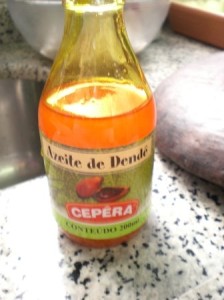
First, this dish is made with azeite de dendê. This, I have learned, is what we call palm oil. This is traditionally used in the dish, but any oil will do if you don’t have access to it.

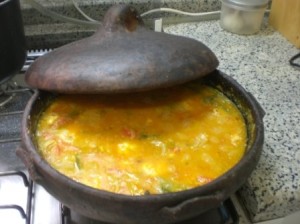
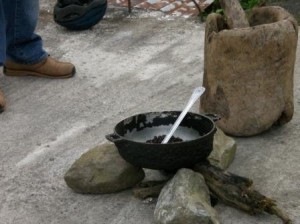
Next, the dish is made in a clay pot. I plan to try to get my hands on one before we move back to the States and pray it doesn’t break in the shipping process.


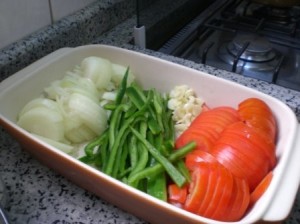
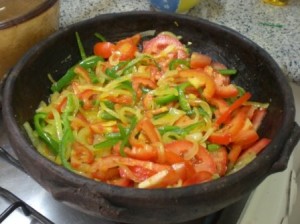
Ingredients were already chopped and ready to go when I got there. I was pretty much a witness to the whole thing, but I got good pictures. Anyway, I am estimating amounts based on what I saw.


Moqueca de Camarão
½ cup palm oil
2 medium onions, sliced
2 green peppers, sliced
4 cloves of garlic sliced
3-4 tomatoes, sliced
1 Tbsp seasoning paste
1 pound shrimp, peeled and deveined
¾ to 1 cup coconut milk
Heat oil in the pot. Add onions, green peppers and garlic. Cook for about 3 minutes. Add tomatoes and seasoning paste. Continue cooking for an addition 3 to 5 minutes. The goal is to cook the tomatoes down into more of a sauce.
 

Add shrimp and cook until barely cooked through. Stir in coconut milk and simmer. Place lid on pot and continue to simmer for 7 to 10 minutes. Serve over rice.
 

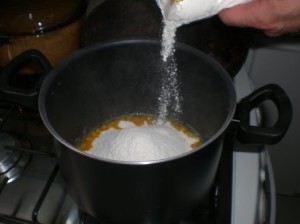
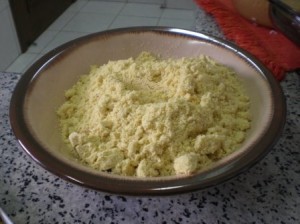
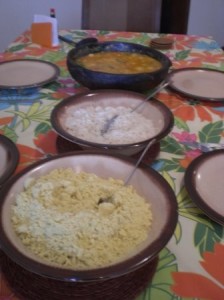
In addition to the rice he also made farofa. Farofa is a toasted mandioca flour most often served with meats and rice and beans. Mandioca is also known as manioc, cassava and yuca. Mandioca is also used to make tapioca – just to throw in some more info for you there.

I had never seen Farofa made from scratch, but it doesn’t look hard. You add a little more palm oil to the pan, a chopped onion and then the mandioca flour and toast it up.


We had an awesome tapioca dessert too, but I’m going to save that for another post. Enjoy your Moqueca!

My Agave Research and More Sugar Confusion

January 29, 2009

I’ve been spending part of my week researching sugars and supposedly natural sweeteners. What I have determined is – I have a headache!
I’ve become more interested in sugar lately because 1) We now live in Brazil where the sugarcane industry is huge. 2) I notice a lot of people switching from this sweetener to that one in an effort to be more ______________ .(Fill in the blank with your choice of words: healthy, green, natural, fake food free, etc.)
I use refined white sugar in moderation. Yes, I do know that this is a processed food, has addictive properties, and on, and on. I’ve read it all. I use a lot less of it currently, but still use the traditional recipes that have been in my family since my great grandmother and they call for sugar.
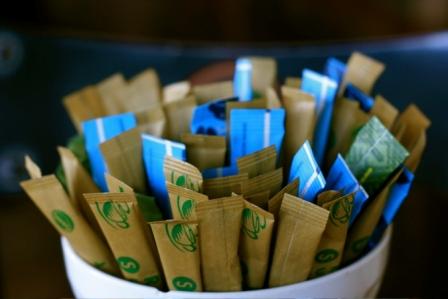
I’ve been questioning agave nectar for a while which lead me to look at other sugars which has led me to the conclusion – raw honey and pure maple syrup probably reign supreme for being the most natural sweeteners. When it comes to all the others, one is just about as bad as the other, for one reason or another.
What started my search: Agave
As most of you probably already know agave comes from the core of the agave plant in Mexico. The short story is the juice is extracted, filtered, heated and hydrolyzed (a chemical process to break bonds) to break down its naturally long fructose chains. So it is basically a processed sweetener and the result is 90% fructose. As most of the information I read states, HFCS gives is about 55% fructose.
Why can fructose be a problem?
As long as you eat fruit you consume fructose. The main reason commercial products containing fructose are a problem is the massive amount (like most things in our society) we are consuming versus the amount we would typically consume from fruit.

One research study I read from Nutrition & Metabolism stated that fruit contributed about 16 – 20 grams per day, while commercial foods are now giving us 85 – 100 grams of fructose a day.
Fructose, unlike other sugars, is absorbed and metabolized directly by the liver. It’s possible this overabundance can lead to problems with insulin sensitivity and obesity. Some evidence of it contributing to a fatty liver has been suggested as well.
So what’s the conclusion?

Heck if I know! Just kidding.

The truth is I’m on a journey just like you – to continue cleaning up my diet and separate myself from this society that seems to be tricking us into believing what is healthy and what is not. My nutrition background helps me to understand how things are processed in our bodies and how things are processed commercially, but that doesn’t mean I have all, or any, answers to the sweetener debate. Well, except for the fact that I’m not in favor of artificial sweeteners at all.

My personal consensus is that I’m not going to switch to something like Agave nectar as my sweetener because I don’t think it is any better than white sugar. I plan to incorporate more raw honey and maple syrup (If I can afford it. U$ 13 for a tiny can at my grocery store in the States.). I’ll continue to use white sugar in some of my baking. At the same time I will be trying to reduce my needs for sweets/sugars all together.
If you’re interested, here is a list of some of my reading along the way. Some of it honest, some of it fact and some of it swayed by industry. I think it is important to check out all sides and decide the best approach for you, keeping common sense in mind.
I also want to mention if you haven’t checked out the blog The Nourished Kitchen and are interested in sweeteners, go there now! She has some great posts on modern and natural sweeteners that I found in my search: Modern Sweeteners: What Are They & What They Do and A Guide to Natural Sugars & How to Use Them

Here are some of my other reads:

Madhava Agave Nectar
The Truth about Agave Syrup from Living and Raw Foods
White sugar vs raw sugar from Green living tips
White Sugar from a processor of Brazilian sugarcane

Photo by Neal McQ, www.freerangestock.com

Lemonade Award

January 28, 2009

I have a feeling lemonade is the last thing on everyone’s mind in the US. I doubt ice, snow and power outages are making you think of summers on the back porch with a tall glass of the good stuff. I hope things are well where you are and you are staying safe and warm.

Daydream with me just a bit that those summer days are just around the corner because I have good news to share. Tangled Noodle honored me with the Lemonade Award! How cute is that?

If you haven’t checked out Tangled Noodle, put it on your list right away. She has a unique perspective on food and life and her posts creatively intertwine her family and ethnic background. You will learn a lot. Her post about The Faces Behind the Food really hit home with me. I love food history and appreciate those who hang on to those cultural traditions.

So now I get to hand out a little sweetness of my own. I’d like to give the award to one of my regular reads Eating Well Anywhere.

This was one of the first food blogs started reading. Laura is full of helpful kitchen tips, answers your most creative food questions and shares wonderful recipes made with fresh ingredients. How about some Chili with Wheat Berries? I bet she has one somewhere for amazing lemonade.

Trying Some New Bars

January 27, 2009

I should probably clarify that I mean the eatin’ kind, not the drinkin’ kind. And this time they were not purchased but made by yours truly.

My husband is training for a marathon type event here in Brazil. The Volta is 100 km race around the island of Florianopolis in Santa Catarina state. It is a relay with 24 stage. Most people participate in teams where each team member runs about 3 legs of the race. Some of it is on the road, some on rough terrain and some on the beach. Needless to say he is running a lot.

He had been asking me if I could make him some kind of bars for part of his breakfast. The bar selection in the supermarket where we live is practically non-existent. You basically have a few choices of breakfast granola bars filled with preservatives.

Now, I’ve tried making my own energy bars before, but I usually end up incorporating so many ingredients that they have way to many calories and fat to be considered nutritional. However, considering how much he is running this isn’t really a problem for him so I gave them another try.

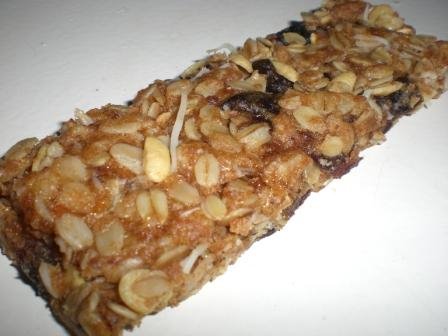
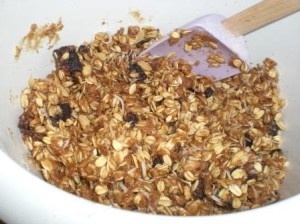
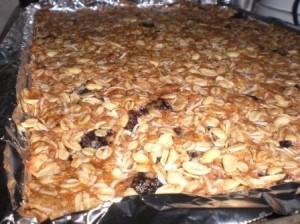
I found this recipe for Chocolate Cinnamon Energy Bars and used part of it as my base and then went on from there. Warning: these have quite a bit of brown sugar. They were almost too sweet with the fruit so next time I’ll be cutting that back. Other than that I thought they turned out pretty good and he likes them too.

However, I’ll be having them in moderation for sure. They fall into more of the meal replacement category than a snack.

Energy Breakfast Bars

2 ½ cups rolled oats
2/3 cup brown sugar
1 cup whole wheat flour
¼ tsp baking soda
½ tsp salt
½ cup honey
½ cup vegetable oil (I used soy)
1 tsp vanilla
½ cup prunes, chopped
½ cup soy nuts
1/3 cup unsweetened, flaked coconut

Line a small cookie sheet with foil and grease well. In a bowl combine oats, brown sugar, flour, baking soda and salt. Pour in honey, oil and vanilla; mix well until all dry ingredients are coated. Stir in prunes, nuts and coconut. Press into greased pan. Bake at 350 degrees for 25 minutes. Cool and cut into bars.

A Country without a Food

January 26, 2009

I think I neglected to mention that I finally got my hands on a copy of Michael Pollan’s Omnivore’s Dilemma. Although I am now half way through it, I was only a few pages into the intro when I knew I would love it. This was all due to the comment below:

As a relatively new nation drawn from many different immigrant populations,
each with its own food, Americans have never had a single, strong, stable
culinary tradition to guide us.

The moment I read it I wanted to exclaim, “Yes, that is exactly what I had been thinking!”
If you are from the US (or even if you aren’t) have you ever thought about this issue? It is one of those things that really came to the forefront for me when I moved abroad. The US doesn’t have a traditional claim-to-fame food. We try to say foods such as hamburgers and fries or apple pie, but the truth is most of those things can be traced back to European countries.
There are some things here and there, but none of them really stand out and say US. You know, like Brazil and feijoada, Ireland and shepherd’s pie, Germany and sausages, France and bouillabaisse, Japan and sushi. The list could go on and on, and the truth is many of these countries have multiple dishes that hold some portion of their identity.
The main reason this issue comes to mind as a traveler and ex-pat is that many of us go to other countries to experience the food. Then we have conversations with those of that country about coming to the US. If you’ve ever had a discussion like this you know where the food conversation goes.
Yep, you guessed it – fast food.
Around here, people go on and on about all the fast food places we have in the US. This always makes me cringe. It is downright embarrassing. Is this really what we are known for in the world of food? Unfortunately, to many people, yes.
I live in a smaller city in Brazil and every year they have a world food fair. At this event there are booths that serve foods typical to other parts of Brazil and other countries of the world. Want to know what they have in the US booth?
Hotdogs.
And people are lined up for these every night. It is a foot long hot dog bar. You get to choose the toppings of your choice.
At first sight of this I was pretty disgusted. I mean, I love a good hot dog at a cookout or better yet a Chicago style dog, but, once more I ask, is this really what we are known for?
Then again, when I tried to think of a substitute nothing came to mind. It was when I read that statement by Michael Pollan that I realized that we really don’t have a food.
That isn’t too say we don’t have great food. Our melting pot is brimming over with delicious eats, but when you get to the core of things nothing stands out as ours.
As the book somewhat suggestions this is what might lead to our unrealistic accusations that come out about once every few years identifying a certain food as an enemy – white rice, pasta, potatoes. I can only imagine what other cultures think of our damning these real foods they see as staples. Not to mention the fact that we feel these foods are killing us and the countries who regularly consume them seem to be happy and healthy without problem.
So what do you think of this issue? Is there a food out there I am missing?
Does our lack of a food of our own make us who we are as a melting pot or is it hurting our ideals regarding healthy eating?


Photo by Nicolas Raymond, http://www.morguefile.com/

Links to a Healthy Weekend

January 24, 2009

Happy Weekend! I’m not sure about everyone else, but this week went by so fast for me. I didn’t get to do all the blog reading I wanted to, but I did find some interesting things this week.

I hope you enjoy them as much as I did. Have a great weekend and I’ll see you on Monday!

Healthy Discoveries had an interesting post on Nia (Neuromuscular Integrative Action). I had a coworker back in the States who taught this, but unfortunately I was never able to try a workshop. It looks sounds so interesting hopefully someday I’ll get the opportunity.

Zesty Cook had an awesome recipe for easy beer bread. I love beer bread! I think I’ll make mine with Guinness.

Will the recession make you fat? My husband sent me this article from MSN this week about how having less money to spend on meals may cause people to choose less expensive, unhealthy foods. Certainly something to think about.

Back in Skinny Jeans had a post about eating out less and hosting dinner parties to save money. First of all, I love hosting dinner parties. I don’t save much money that way, but I guess if you rotated hosting with friends you could.

I do want to say that one of the best ways to save money is stop eating out. This is the main way my husband and I save our money to travel. In Brazil, it is much less expensive so we tend to do it more often, but when we lived in the US we probably ate out about twice a month.

I would always come across people giving me the “must be nice” attitude when we would head out for a trip. Meanwhile they were spending buku bucks on lunches out every day. Eating from home can really save the dollars!

Goats: The Green Way to Kill a Weed

January 22, 2009

I’ve got a bit of fun info for you today that is somewhat related to both food and the environment. For the last few months I’ve been trying to figure out a way to incorporate goats into one of my posts.

I enjoy a little goat cheese mixed into dishes although I’ve never used it at home myself. Then there is goat meat, but let’s not even go there. I’ve seen it on the menu in places like Jamaica, but I simply could never eat goat meat whether it means I’m not being open to other cultures or not.
And this is why:


Although I didn’t talk about it much at the time, when I was home visiting my family over the summer 4 of my parent’s goats were pregnant. I got to experience the birth of 6 baby goats including 2 sets of twins! I’m smiling now just thinking about how much fun it was.

I saw them over Christmas all puffed out to keep warm in the cold temperatures and this is what brought the topic of goats to mind again.


I was flipping through a magazine this past weekend and I finally found my goat topic – kudzu. Kudzu is a vine/plant that was imported to the US from Japan in the mid-1800s and was first used to prevent soil erosion. Soon it took off and got completely out of control, mostly in the southern parts of the US – Georgia, North Carolina, etc. Now it is considered a very annoying weed. Some states have even mandated that people remove it from their property.

This is where the goats come in. As you know, and I assure it is true, a goat will eat anything. So instead of herbicides which don’t work anyway, land owners are using goats to clear the kudzu from their property. Apparently the goats love it and nutritionally it is pretty good for them, according to what I’ve read.

When I came across the story it struck me as such a positive example of an environmentally safe way to eliminate a weed. No chemicals or dangerous materials, just a cute goat munching away. And of course, it gave me an excuse to share my photos.

Stuffed Zucchini

January 21, 2009

One thing we always had a lot of growing up was zucchini. My dad’s garden would overflow with it for a few weeks each year when it was at its peak. During this time we would overdose on it – fried, boiled, in bread, as fritters. Shredding it was never fun, but the end result was usually worth it.
While zucchini is a summer squash this dish has all the comforts of winter for me. I found it on the Food Network a few years ago. If I can score an overpriced zucchini this time of year at the store, I like to whip it up for something different. It always makes for a lean, high protein, healthy carb dinner with all the vitamins tomatoes and squash have to offer.
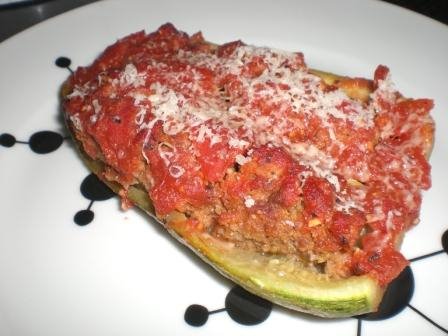
I like the zucchini stuffed better than I do the peppers so while the original recipe is Stuffed Zucchini and Red Bell Peppers my version is just zucchini. Below is my adapted recipe, click the link to see the original.

Stuffed Zucchini

Adapted from the Food Network and Giada De Laurentiis

Olive oil
1 small onion, grated
¼ c parsley, chopped
1 egg
3 tbsp ketchup
3 cloves garlic, minced
1 tsp salt
¼ tsp pepper
1/3 c grated parmesan
¼ c dried bread crumbs
1 lb ground turkey
3 to 4 zucchini, halved and hallowed out
1 ½ c marinara sauce (I use my homemade version)

Preheat oven to 400 degrees F. Drizzle oil in oven proof baking dish. Whisk together – onion, parsley, egg, ketchup, garlic, salt and pepper. Mix with ground turkey, bread crumbs and cheese. Stuff the zucchini with the meat mixture, arrange in dish. Cover with marinara (you could also top it with cheese) and bake for 45 minutes.

Jamaican Blue Mountain Coffee

January 20, 2009

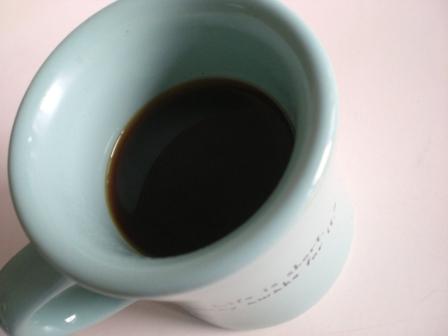
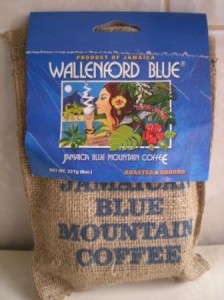
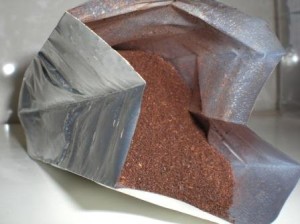
As you know I recently returned from a trip to Jamaica. There are many things I love about visiting Jamaica, but one that tops the list is Blue Mountain Coffee. When we go I have to bring back some of this amazing stuff. To me, it is truly the best in the world. I’ve had a lot of different coffees including 100% Kona and none can compare to real Blue Mountain Coffee.

Some quick facts on this variety:
The name Blue Mountain Coffee can only be given to coffee grown in at the highest elevation in the Blue Mountains and it must be board certified.
This bean comes from the Arabica variety and the Blue Mountains produce the perfect location for its growth.
It is known for its non-bitter taste and mild flavor.
Most of this coffee exported from Jamaica goes to Japan.
You can order it online from various brands (or take a trip to Jamaica!). It is well worth an occasional splurge if you are a true coffee lover.


I love coffee of all kinds and it is one of those things that I believe can benefit our health. I’m not saying you should drink it if you simply don’t like it (tea is great too), but those of us who enjoy it shouldn’t be worried.

There is so much research out there and more coming everyday about how coffee can help your health. Many of the negative views of coffee are now being dispelled as myths. For me, coffee is like white rice. Many cultures have enjoyed it for many years as a staple in their diets.

I would need much more hard evidence to eliminate coffee from my daily routine. It is as much about the ritual for me as it is the flavor. I love my mornings working at my laptop with warm coffee nearby in my favorite mug. I do exercise moderation having about 2 to 3 cups a day.

I’ve gone through phases where I’ve had a lot more and I don’t think this is healthy. Especially considering how it makes me feel. At the level I consume right now I look forward to it, but I do not suffer from withdraw headaches if I don’t have it. This is what has made me realize I’m at a healthy balance now.

Here are a few things studies have suggested regarding the moderate intake of coffee. Keep in mind that these are findings, and of course, as with most science, not exactly hard fact yet. For me, they are enough evidence to hang on to my coffee habit, though.

It may reduce the risk for Type II diabetes.
It may reduce the risk for Parkinson’s and Alzheimer’s disease.
It may have a protective effect against some cancers.

These kinds of things really don’t surprise me because coffee is a real, natural food. Now that I live in Brazil I see coffee plants all the time. Did you know that decaffeinated coffee is totally foreign in Brazil? I’ve had friends here ask me about it and they don’t understand it at all.

Many times I think the ritual of coffee drinking may be what can help us mentally. While I know it is perking my body up, the act of drinking it is comforting and stress reducing for me. Maybe you feel the same way. Let me know in the comments.

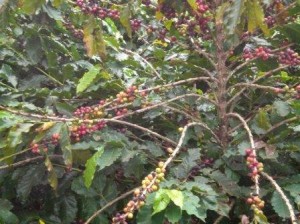
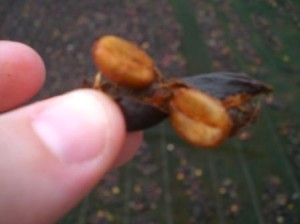
Back to the Blue Mountain stuff. A few years ago I had the chance to go on a bike tour of the Blue Mountains in Jamaica and check out this coffee for myself. I’ve posted a few pictures below.

And I just couldn’t leave this post without giving you a recipe. I made these late last year for a friend here in Brazil. I didn’t have Blue Mountain coffee at the time so any finely ground variety will work well. Careful! They pack a huge coffee punch. I was amazed at how good they are and plan to make them again soon. Enjoy!!

Jamaican Coffee Brownies
Taken and slightly adapted from epicurious.com

2 cups sugar
15 tablespoons (2 sticks minus 1 tablespoon) unsalted butter
3/4 cup unsweetened cocoa powder
3 tablespoons finely ground Jamaican Blue Mountain coffee beans
1/2 teaspoon salt
3 large eggs
1 1/2 teaspoons vanilla extract
1 1/4 cups all purpose flour

Preheat oven to 350°F. Spray 13x9x2-inch metal pan with nonstick spray. Combine sugar, butter, cocoa, ground coffee, and salt in large bowl. Place bowl over saucepan of simmering water and whisk until butter melts and ingredients are blended (texture will be grainy). Remove bowl from over water; cool mixture to lukewarm if necessary. Whisk in eggs and vanilla. Add flour over and fold in.

Spread batter in prepared pan. Bake brownies until toothpick inserted into center comes out clean, about 25 minutes. Cool brownies in pan. Makes about 15 brownies.


Want to create beautiful food and product photos that you can't wait to share?!
Discover your style, control the light, and shoot using the tool you know how to use (yes, your phone included). Learn about free resources, Live Q&As with Lori, and online courses you can take from anywhere in the world!
We respect your privacy. Unsubscribe at any time.