Goiaba

I thought I’d revisit my promise to introduce more of the Brazilian produce I’ve come to enjoy. Today I thought I’d talk about goiaba (pronounce goy-aba), known in English as guava.

Guava is a popular ingredient in Brazil. Almost every menu will have a dessert option that involves guava. In this case it is usually the goiabada which is like a thick jam. Of course, it is full of sugar, but very tasty.

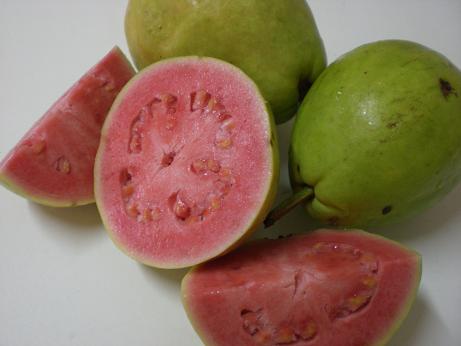
I have had the opportunity to buy fresh guava and I do so every few weeks. Guava is a fruit that is pink on the inside and is covered by a thin green skin which is edible. The texture is probably closest to a kiwi, or somewhere between a peach and an apple. The little seeds inside, also edible, are like Grapenuts cereal.

While the fruit has a distinct musty smell it is hard to describe the flavor except for unique. It isn’t overly sweet or sour. Many people slice guava into quarters and eat each section as a fresh fruit.

To be honest, I don’t really like guava fresh like this. There is something about the flavor of the skin and those crunchy nuts that I can’t get used to eating.

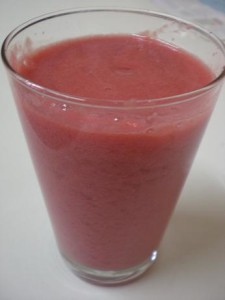
I have found one way I like it though – juiced so I can drink it. Putting the guava through the juicer produces a really thick pulp. I add a little water to it and maybe a ¼ teaspoon of sugar.


Earlier this year when I was looking around the USDA web-site I found some interesting information. Yes, the nutrition dork that I am and considering the fact that I worked for a USDA grant funded program for a while, I do search around there for the latest research.

What I found out was that when it comes to antioxidants – Blueberries #1 and Guava #2.

US and Thai researches determined that guava packs an amazing amount of antioxidants. What is even more exciting is that farmers in south Florida are experimenting with the crop. We’ll still have the pesky transport issue to deal with, but this might mean more availability of guava in the U.S. You can read more about the research here.

One thing I found to be funny in the article is this line, “…to meet rising consumer demand for unusual fruits.”

I think “unusual fruit” is a bit of a relative term. Not sure why it caught my attention. Probably the whole living abroad thing has made me more sensitive to these little things.

If you asked someone who has it readily available to them, I doubt they would call it unusual. Maybe exotic, delicious or healthy would be a better term. Looks to me like they were being a little non-PC with their produce talk!
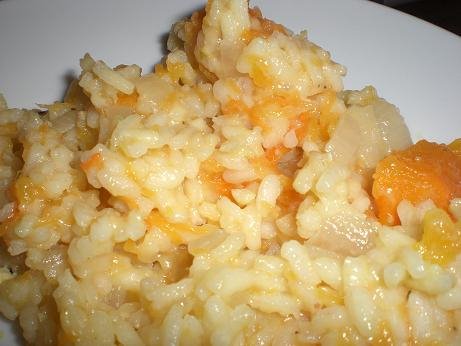
P.S. Being south of the Equator it took me a little longer, but I got my foodbuzz packet last night. This stuff is great!!

Fall Flavors and Risotto

The first time I made risotto I was definitely intimidated. I was committed to putting in the time, but I thought it was going to take me forever to slowly stir in the warm chicken stock to create that creamy consistency the dish is known for.

To my surprise it wasn’t any more time consuming than most of my other cooking. I return to making risotto time and time again. I love how it gives you the satisfaction of a heavy, cream bases sauce when really it can be made to be very low in saturated fat.

I’ve mentioned how much I love butternut squash this time of year. Last week I pulled out one of my favorite risotto recipes. It turned out great once again so I thought I would share it.

I originally found this recipe for Butternut Squash, Olive and Parmesan Risotto submitted by Lindsay Olives. I made some adjustments to it, first removing the olives. I like olives, but I tried the recipe as is once and I didn’t like the flavor they added to the dish.

This is a good weekend meal. I often roast the squash earlier in the day so that it is completely cooled and easy to handle by the time I start the risotto. You can also roast it in the microwave to speed things up. I have done this before and it really doesn’t take away too much flavor.

Butternut Squash and Parmesan Risotto

1 small butternut squash, split in half and seeded
2 T butter or olive oil
1 medium onion, chopped
4 cloves of garlic, minced
1 cup of Arborio rice
1 quart of chicken stock, warmed
½ cup freshly grated Parmesan cheese
Salt and pepper to taste

Pierce the flesh of the squash with a knife and place cut side up on a baking sheet. Bake at 400 degrees F until very tender, about 1 hour. To microwave, place cut side up in a microwave safe dish. Cover with a damp paper towel and cook until tender.

Let the squash cool. Scoop the flesh out and break into smaller pieces. Set aside.

In a large sauce pan or soup pot, heat butter or olive oil. Add the onion and garlic cooking for 3 minutes. Add the rice and stir to coat with the oil or butter. Begin adding the chicken stock about a ½ cup at a time. Stir constantly and add the next addition of stock after the previous has been complete absorbed.
Continue this process until all the stock is used which takes about 25 to 30 minutes. At this point the rice should be cooked and tender. Stir in the squash breaking the pieces up as you incorporate it into the rice. Stir in the cheese and salt and pepper to taste. Makes 4 servings.

Both Ends of the Spectrum

It seems that at any given time what one part of the population is fighting for, another part is fighting against.

Take food labels and nutritional information for example. For a long time those of us who are concerned about the health of our nation and our families have supported the fact that this information be made public so we can all make informed decisions. This is especially true for those not-so-healthy places that like to hide their nutrition info a bit.

Well this article originally posted in the Harvard Crimson tells the other side of the story.

By the way, how cool would it to be to write for a college newspaper and have CNN pick it up. Well, then again, she goes to Harvard so maybe it isn’t such a big deal. She’s probably already used to a lot of success and exposure!

The article talks about how parents have requested that nutrition information for dining hall foods be taken down from the hallways and dining rooms.

The reason? It contributes to the struggle of those with eating disorders.

I like to know what is in my food, but I have thought about this issue a lot. First, I think it is great that the school made the effort to supply the info. However, now I can definitely see how this is a concern for people who struggle with eating disorders especially in an atmosphere where the rates of such conditions are so high.

Those disorders aside, sometimes I think they can even have an influence on those of us who try to be healthy in general. It is so easy to become obsessed with food whether it is in a manner where you eat a lot of unhealthy stuff or if you are to the point where you are overly concerned with the nutritional benefit.

I consider thinking about food all the time to be a bit unhealthy. Enjoy food, yes, but constantly thinking about its benefit, burning the calories off, what will hurt and won’t hurt me can be considered a somewhat unhealthy relationship.

Well, and let’s be honest. Sometimes you just want to indulge a bit. In those cases, when it comes to nutrition information, I don’t wanna know!

So how do you feel about posting nutrition information and its influence on our relationships with food?

So How Do You See It?

I am recognizing that it takes a long time to change my desire for some specific fake foods. Some of these convenience foods have been so far ingrained in my head as healthy or a worthy splurge that I find it hard to break free of those thoughts.

So far I think I am pretty happy with the changes I have made in reducing my fake food intake. I am much less reliant on packaged foods. Overall, I am getting less additives and less sodium from these sources.

I think I am weakest on the weekends. Even though my weeks are busy I still enjoy doing all my cooking then. This was the case when I worked outside the home too. I am the type of person that likes to do absolutely nothing on the weekends. (No I don’t have kids yet.) Sometimes I will bake, but this hasn’t happened too often lately.

These are the times when it is easy to run to the market and pick up some chips or crackers, a frozen pizza or some packaged cookies.

While I am a long time advocate of everything in moderation, I am still trying to break that feeling of occasionally needing these things to fulfill a craving.

For me, it is the need to train my brain to want real food, even if that is something like a big brownie or cheesy lasagna.

I still buy some packaged foods, but I am always questioning the fact of whether I should really have it. I mean, it is not food. It may have started as a food, but has been manufactured in such a way that nutritionally it barely resembles the initial product.

Don’t get me wrong, I still believe in everything in moderation, but I think it should all be actual food. I decided to think about and list those fake foods I still struggle with the most.

I’d also like to know how you see it.

What are some of the foods you want to reduce, but are still very much attracted too?
Do you have any healthier varieties of the foods I’ve mentioned and why are they healthier? Maybe you'll give me some ideas.

Crackers
Doritos – especially while watching sports!
Cereal – I choose the healthiest possible, but I still wonder about its real food qualities
Packaged Granola and Granola bars – mostly real ingredients, but often lots of sugar and some preservatives

Photo by jeltovski, www.morguefile.com

A Life Less Sweet Guest Post

Good morning!
I did a guest post for Cathy at A Life Less Sweet on HFCS from an ex-pat perspective. If you'd like to check it out, head over there today and take a look. Feel free to leave any comments and I will answer you there.

Baby Cranberries

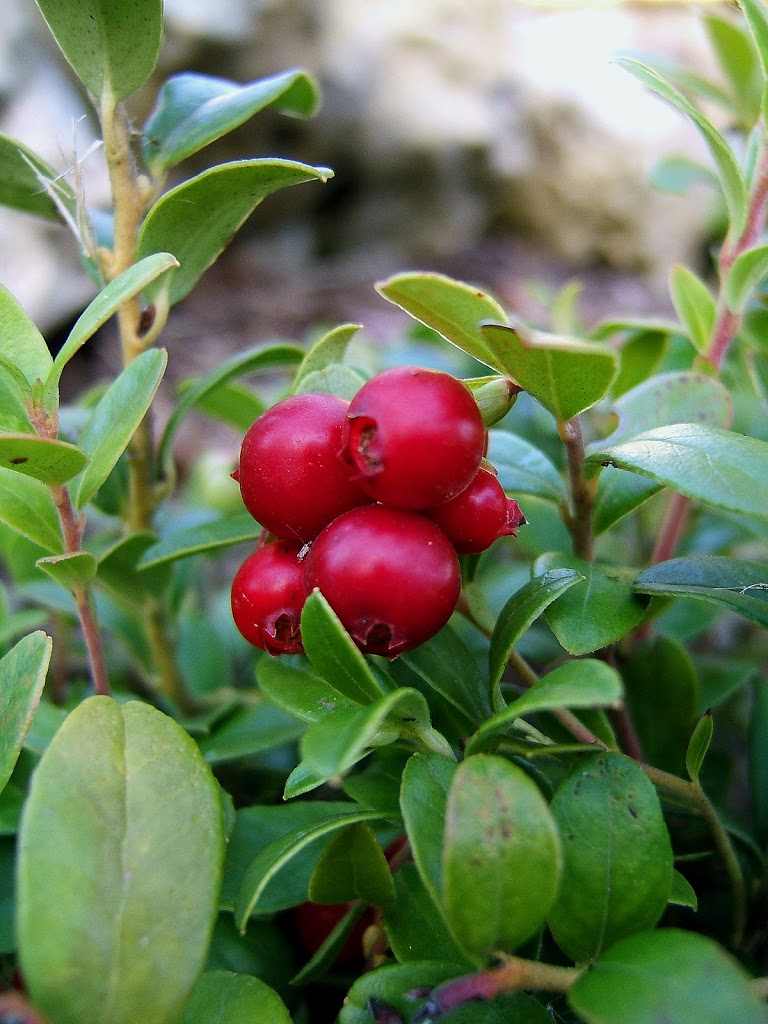
Well, okay, they aren’t actually baby cranberries, but are part of the cranberry family.

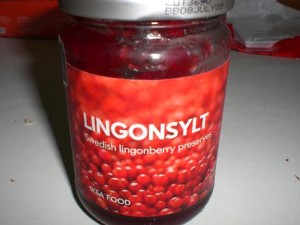
I love cranberries and when I was introduced to the lingonberry I fell in love with it too. It is grown in areas such as Denmark, Sweden and Finland which does explain why I first discovered the fruit at IKEA.

In my research I did find that they are grown in some parts of Alaska and in the US are often referred to as the cowberry. They really do look like mini cranberries.

Lingonberries are often made into preserves or sweet sauces. To be honest, this is the only way I’ve had the opportunity to enjoy them. Lingonberry preserves have that tart flavor that you associate with a cranberry yet there is a unique taste that is difficult to explain. I often use it as a sandwich spread or on top of breakfast foods like French toast.


I don’t see it around much so when I make it to an IKEA I always get a jar of their preserves. Aside from the sugar there aren’t an excessive amount of additives in each jar.


What sparked my interest in writing about lingonberries today is that while doing some research for a paper on omega-3 fatty acids I saw them listed as a source.

It turns out that the seeds of these little gems contain the omega-3s. It is often listed right up there with flaxseed.

I find this very exciting! I’m always looking for additional sources besides my salmon. Now wait! There’s a good idea. Grilled salmon with lingonberry sauce. Yum!


Top photo courtesy of WikimediaCommons

Links to a Healthy Weekend

Most weeks tend to go fast for me, but this one went incredibly fast for some reason. I’m still trying focus on Friday and it is already Saturday. Here is a little of what I enjoyed reading this week.

There is all kinds of talk about fall food around web – apples, pumpkins, sweet taters. Given my recent interest in the latter, these Turkish Sweet Potato & Apricot Rolls from Eating Out Loud look incredible. A new way to enjoy what is often just a holiday favorite.

I found this post about coconut oil on the Nourishing Gourmet and I was amazed, to say the least. I’ve always been leery of the amount of saturated fat in coconut products, even though I love them. There is some really thought provoking information provided regarding its health benefits and I’m planning to follow up with some research of my own this weekend.

Back in Skinny Jeans provided some info on what worked for her when it came to breaking free of the diet soda death grip.

Photo of Parque Barigui, Curitiba-PR, Brasil

Butter for Baked Goods

In the past I used margarine for all my baking. It was supposed to be better for you and it was cheaper. What could be better?

Of course, there was the healthy peer-pressure (or guilt). Butter? You are using butter? Oh no!

Then down the pipe came the trans fat awareness efforts. Saving a few extra bucks wasn’t worth all this newly recognized deadly fat.

There’s a lot of debate about the butter vs. margarine thing especially since a Harvard School of Public Health study linked hydrogenated-fatty acid (margarine) use to heart attacks in women a few years ago. Most likely due to the trans fats which have been found to raise LDL cholesterol and lower HDL. A very bad senerio.

I found this from a Harvard HEALTHBEAT pub in 05:


The truth is, there never was any good evidence that using margarine instead of
butter cut the chances of having a heart attack or developing heart disease.
Making the switch was a well-intentioned guess, given that margarine had
less saturated fat than butter, but it overlooked the dangers of trans fats.


Wow, I wonder how many other things that are marketed as good for us are guesses. Sugar replacers, HFCS maybe.

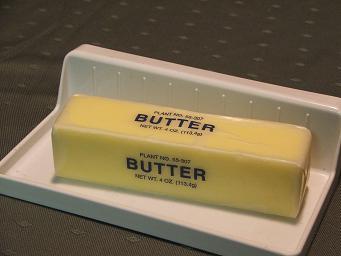
In recent years, I’ve gotten back to butter when it comes to baking. One reason is because many original recipes I have from the past call for butter. I think it yields a better product, more like it is supposed to be. It tastes better to me and if you are going to splurge you should truly enjoy your food.

Margarine is really a fake food because of all the processing it has gone through. Sometimes it is tempting to pick it up to save a buck. Yes, I am very budget conscious, but I always change my mind.

Now when it comes to fat, there is no question that olive oil and other veggie oils are superior for health. When it comes to baking though, over the past few years I’ve gone back to butter.
Like anything else with saturated fat, overdoing it is not a good thing. But if you are making your own baked goods and know exactly what goes into them, to me, it is fine in moderation if you are a healthy person and eat animal products.


Photo by ronnieb, www.morguefile.com

A Passion for Fruit

When I was starting out with my food blog I had a mission to try and keep it separate from my Brazil blog.

As most of you know, I am living abroad and while I spend some time in the US, more of my time at the current moment is spent here in Brazil.

I started thinking about it though and I have exposure to some pretty cool ingredients here, especially fruits. I thought maybe others might like to see a little bit of what I have around.

Plus, I don’t know where all my readers are from so maybe you have access to some of these things too.

So, every now and then I might mention an ingredient or two that I have come to love here in Brazil. I’ll let you know what I do with it too.

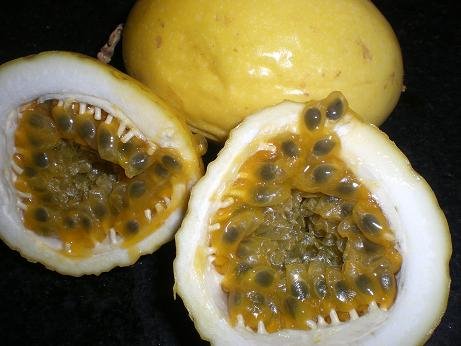
What better place to start than with my favorite fruit, Passion Fruit, or Maracujà.
I love anything and everything made with this tart exotic treat that is known for its calming properties. You can find it fresh, juiced and as a dessert such as cake or mousse.

Around here it is guarana for energy and maracujà for sleep.

I haven’t personally noticed it making me sleepy, but I’m a pretty caffeinated person on a regular basis so maybe I am overriding its affects.

I’ve mostly found the yellow variety here. There is a purple variety, but it is more common in Australia. I’ve seen the purple on occasion, but have never tried it.

Its little black seeds are edible, pack some fiber and they add a great crunch to yogurt. I like to mix the fruit pulp and seeds in with vanilla yogurt.

A few months ago I went to a yoga with a friend. The instructor gave us tea made with passion fruit after class.

She explained the recipe to my friend, however, being true to her yoga, she was a bit of free spirit and we couldn’t get exact instructions. One thing we did discover is that there is no actual tea in it. You just drink it warm like a tea.

I’ve managed to recreate it and I have it almost every week. If you have access to passion fruit give it a try with this tea or mixed in your yogurt. It might become your favorite fruit too.

About 5 cups of water
¼ c sugar
1 inch piece of fresh ginger, cut into small pieces
1 passion fruit

Use some of the water and the sugar to make a simple syrup. To a large pot add the remaining water, simple syrup, ginger and pulp from the passion fruit. Bring to a boil, reduce heat and simmer for about 10 to 15 minutes. Your house will smell awesome by the way!

Pour the liquid through a strainer or colander to separate the pulp and seeds from the liquid. Enjoy it warm in your favorite mug.

Could It Be?

I will admit I am a huge Starbucks fan. Unlike some others I know, for me this does not translate to frequent visits. It is much too difficult for me to part with $5.

I kind of like it this way though because it has remained a real treat for me. Back home I went about 3 times a month. It would be my meeting place with friends to catch up or something to cheer me up when I was having a really bad day.

By the way, have you ever been to a Starbucks in Seattle. I’ve never heard such complex orders in my life. I actually felt a little stupid when I just ordered a non-fat latte. I felt like I should be more creative or something.

Okay, back to the point.

Well, surely you’ve noticed how desperately hard they are trying to appeal to the health conscious. Considering the fact that they have always had a skinny latte, yet now they feel the need to market it.

I’ve never really had a hard time choosing a healthy beverage there. Their pastries are a different story.

I rarely get one, but when I do it has to be a scone. Unbelievable! Luckily I have as much of a conscious about consuming 500 calories in 3 bites as I do parting with $5.

When I saw all their ads for healthy foods I thought – Here we go. Lets load ‘em up with sugar and fat replacers and call ‘em healthy.

But I got a friendly marketing email from them last night.

Could it be that they’ve actually created a truly health option? Part of the email stated,

Together they are made from a range of great ingredients, including whole grains, fruit, nuts and seeds. None contain artificial sweeteners or high fructose corn syrup.”

Now, I haven’t seen the whole ingredient list, but this is enough to make me look into it. Here are the products if you haven't seen them yet.

Now, I can’t say this will make me start buying breakfast there. It is really just a specialty coffee place for me. I still need to see the calorie content, but I am glad to see the bit about the sweeteners.

They may provide a better option for those frequent visitors. Well, that is as long as they don’t pair it up with a venti, whole milk, white chocolate mocha every day.


Photo by blitzkrieg, www.morguefile.com

Sweet Potatoes and Coconut


Okay, I tried it.

I think I was semi-successful at recreating the soup I had in Ireland, Sweet Potato and Coconut Soup.

Just a few notes. Mine doesn’t have the rich orange color that yours probably will. I had to use sweet potatoes, batata doce, from here in Brazil which have a white flesh and look like this.


I’m looking forward to trying it with sweet potatoes from home when I return around the holidays. The starch from the potatoes makes this a really thick soup so if you like it thinner add more chicken stock. I loved it, but my husband said it was a little too sweet for him.

4 – 5 large sweet potatoes, peeled and chopped
1 medium onion, chopped
1 large carrot, chopped
2 tbsp Extra Virgin Olive Oil
3 cloves garlic, chopped
1 tbsp unsalted butter
¼ tsp sugar
2 tsp cinnamon
4.5 cups chicken stock or broth
½ cup light coconut milk

Heat olive oil in soup pot, add potatoes, onion and carrot. Cook on medium for about 8 minutes stirring frequently. Add garlic, butter and sugar; cook about 10 minutes more, stirring frequently. Add cinnamon and stir to coat vegetables, about 30 seconds. Add chicken stock, bring to a boil; reduce heat and simmer, partially covered, for 10 minutes, or until vegetables are tender.

Using an immersion blender, puree all ingredients until smooth. Stir in coconut milk. Garnish with finely shredded coconut, if desired. Makes 6 servings.

New Blogger at Charity Mile

Just wanted to let you all know about my new blogging gig. I am very excited!

I will be writing for Charity Mile. The blog focuses on athletic events for a cause. I've planned a few 5Ks in the past so my focus will be on event planning with some race nutrition and international events mixed in.

My first post went up today and you can find me there on Mondays and Wednesdays for sure with a few extras added in throughout the week. If you have an interest in race events, stop by and check out some of the information.
Photo by cohdra, www.morguefile.com

Links to a Healthy Weekend

I hope everyone has a great weekend! These are some of the things I really enjoyed reading this week.

Tonic News Network had a great post about eating locally. It provides an interesting list as to why it is beneficial. My favorite one is Eating local is better for air quality and pollution than eating organic.

This is a big reason why I didn’t jump on the organic bandwagon when it was becoming so popular. People seemed to be buying organic and forgetting about the fact that it had to get to them in Indiana from California. I think there is much more awareness now though and things are changing to support local AND organic.

I am a Food Network addict. I haven’t been able to watch it a lot recently, but it used to be on constantly before we made our move. I enjoy Good Eats from time to time because I have a love of food science behind my nutrition/health/cooking exterior. Eat.Drink.Better. posted this week about how Alton Brown is going to focus his show more towards sustainable and local food choices. Can’t wait!!

Now, I’m a Google fan, would love the experience of working there some day just to see what all the hype is about. However, I have to admit that this post at That’s Fit made me a little queasy. I love the salty and savory breakfast combo, but it has to at least look appetizing. Just something to make you glad you are a healthy eater.

I just started reading Does This Blog Make Us Look Fat and I am loving it for a daily laugh. This post about reducing your consumption of beef products had me laughing out loud.

Jell-No!

Raise your hand if you’ve ever been on any type of restrictive eating plan (aka, diet) where sugar free, fat free pudding or flavored gelatin was your main source of dessert.

Yes, my hand is up.

Not recently though. Over the past couple years whenever eating this lackluster sweet, I could immediately tell I’d eaten the chemicals.

Speaking of chemicals, is there any actual food in this stuff?

For those who may not know gelatin is made from collagen which is in animal connective tissue. I remember the day I learned this in one of my nutrition classes. I was a bit grossed out.

Connective tissue? Yum, bring on dessert!

I guess one could stretch that technically this is a natural ingredient despite the face that it is processed. It is just all the other stuff in there. Flavors, colors, and in the fat and sugar free versions, aspartame or similar sweeteners. The fat and sugar free pudding is similar as far as chemical sweeteners go.

A dessert filled with this stuff usually leaves me with a headache and feelings of sluggishness. I think it is mainly from the over consumption of aspartame.

If you think about all the desserts boxed pudding and gelatin are used for, it is usually an excess amount of the stuff. Not only do you use the pudding mix, but sugar free, fat free whipped topping as well. Too much!

I continue to be amazed how as a society we’ve accepted these foods as healthy or diet friendly. I am a believer that you are better off eating a homemade cookie or piece cake with real ingredients than a spoonful of chemicals.

No doubt this stuff has some staying power. Although in the beginning it wasn’t there to be diet food, it was more there for convenience. I learned when I read Something From the Oven that cookbooks throughout history are filled with gelatin desserts from boxed mixes.

Then the non-fat, non-sugar versions came out and it was instant low calorie, health food.

I’m guilty of indulging in a gelatin dessert and a pudding cup in the past. Speaking of this did you see the Sex and the City movie? I was just able to see it on the flight back from Ireland. I loved the part where Charlotte would only eat pudding cups in Mexico. Too funny!

Anyway, this is one of those foods that was relatively easy for me to give up. Not nearly as difficult as diet soda! However, I do think I’ve kicked the diet soda habit except for my occasional cocktail. I’m having a hard time parting with it as a mixer.


Photo by Seemann, www.morguefile.com

Wear Your Food

A post just for fun. I found these yesterday and just had to share.

I love it when plain t-shirts are made funny especially when nutrition and health are the focus. These tees from FoodTee Market are perfect for health-focused foodies.

I love the grainiac one! I just wish they came in another color besides white. I'm not a white tee fan.

Maybe a little early holiday shopping?

The best part is that part of the proceeds go to three organizations devoted to improving the eating habits of youth and nutrition in schools - The Food Studies Institute, Two Angry Moms and Better School Food.

Teff

Ever heard of it?

I hadn’t, but Ethiopian food is one of the cuisines I have yet to try. Apparently this is an up and coming grain which is a cereal crop in Ethiopia.

I’m really getting into this introduction of new grains that seems to be the trend in healthy eating. It is exciting that there is a whole world out there of different textures and flavors to be discovered.

The Purdue University Department of Horticulture provides some info on Teff and some recipes. It is often ground into flour and is grown in the US, but usually in small amounts to supply Ethiopian restaurants.

I came across it while catching up on my magazine reading last night. Apparently Teff is full of iron, calcium and fiber. In addition, it appears to be very low in gluten.

It can be eaten like oatmeal or mixed with things like ground meat to add nutrition to burgers or meat loaf. I did a little search and actually found it mentioned on several food blogs throughout the past few years.

So what’s the news? Have I been left in the dark with this new-to-me grain, or is everyone else just now discovering Teff too?

Adding it to my list of new foods to try:
Black Rice
Quinoa
Teff

Photo by Rasbak, Wikimedia Commons

Travel Kitchen

Having been gone for 3 weeks, I came back to a severe case of what I will call travel kitchen. You know, when the fridge is empty and only a few dry ingredients remain in the pantry.

I was honestly ready to hop back into the kitchen after all the great foods I had while traveling, but there really wasn’t much to make. It also doesn’t help that we returned on a Sunday and we now live in a place where no grocery stores are open on Sundays.

Even yesterday, I was stuck in the apartment waiting for our delayed luggage to arrive so I had to come up with something.

Luckily I had an onion that managed to make it through the extended travel period so I pulled out what has become one of my favorite recipes.

I combined the lentils, some rice and onions to make Mujadarrah. I found the recipe at Allrecipes.com a last year. I absolutely love it. It is so quick and easy to make, filling and good for you.

I’ve come to discover lentils just recently. They make such a great addition to rice dishes and soups. And of course they are really entering the media as a valuable food when it comes to health. They contain lots of soluable fiber, B vitamins and protein.

For the recipe I use, I add a chicken bouillon cube and cumin to the lentils for flavor. Yesterday I sprinkled in some curry powder as well. Once in the bowl, I top it with some hot sauce. I love spicy food.


So there you have my make-do meal until I can get to the market. It is just a good thing that onion hung around.

Do you have any go-to meals that you turn to when the fridge and pantry are low?

A Week Full of Foods

I am back at the computer and in my own kitchen after a wonderful week city-hopping in Europe.

Sorry for the delay in posting. Last week was not nearly as leisurely as my time in Ireland which translated to little time at the computer and limited web access.

One thing the week did not lack was interesting food. I am going to be honest and admit that there was a lot of splurging last week. But what better place to do it than in Europe where some of the best foods in the world originated.

I’ve returned with a renewed inspiration for cooking, along with a desire to return to some healthier foods. There is that feeling of the need to detox a bit after so many sausages and beer.

As I do that I am planning to research some of the best things I had while traveling and try my chances at recreating them at home.

I love this season in the US – fall, apples, Halloween, pumpkin, Thanksgiving and Christmas. It gets me excited about cooking and baking and this year I have this blog to share it.

Here are some of the more cultural foods I had the opportunity to try this past week. I plan to get back to regular posts this week and incorporate some of my inspiration from my travels.

Pork-filled Dumplings and Sauerkraut in Prague

Medovnik (Honey Cake) in Prague

Goulash and Bacon and White Bread Dumplings in Prague

Turkish Lamb Kebab in Vienna

Langos (fry bread) with garlic and cheese in Budapest

Hungarian Paprika Chicken with Egg Dumplings in Budapest

Easy Labels

Last week in Ireland I stopped in one of those upscale, healthy foods grocery stores to grab something for lunch. I ended up with a Mexican Bean Wrap. After making my purchase I realized that I used the handy labeling on it to make my selection. It looked like this:


Then on Friday I was checking out all my favorite food blogs and came upon Very Good Taste again and this post about food labeling in the UK. This is basically what I was witnessing on my packaging.

One thing I've found to be true is that the more you cut fake, shelf-stable foods from your diet the less you need food labels.

Sure, I know from past calorie counting that there are about 80 calories in an apple, but other than that who cares. My point is, we know fresh, healthy foods like produce are good for us. We really don't need a specific number to tell us that.

However, for foods like the wrap I got, it is helpful. It was delicious by the way.

I found the above post to be really interesting because it outlines all the politics that go into food labeling. We have similar problems in the US. All this infringement on rights of either the consumer or manufacturer.

Then I think they purposely make it confusing so people really don't know what they are eating.

I understand food labels well, but that is only because I was required to study them for about 2 years of my life! I doubt the general public is going to put in that much effort. I've also found they are really hard to explain to someone else.

I wish we could come up with a similar system, where the important things are listed right out in the open for you. I know several attempts have been made at simplifying it, but they are brand specific.

A cohesive, simple program that everyone follows would be perfect. Dreaming, I know.